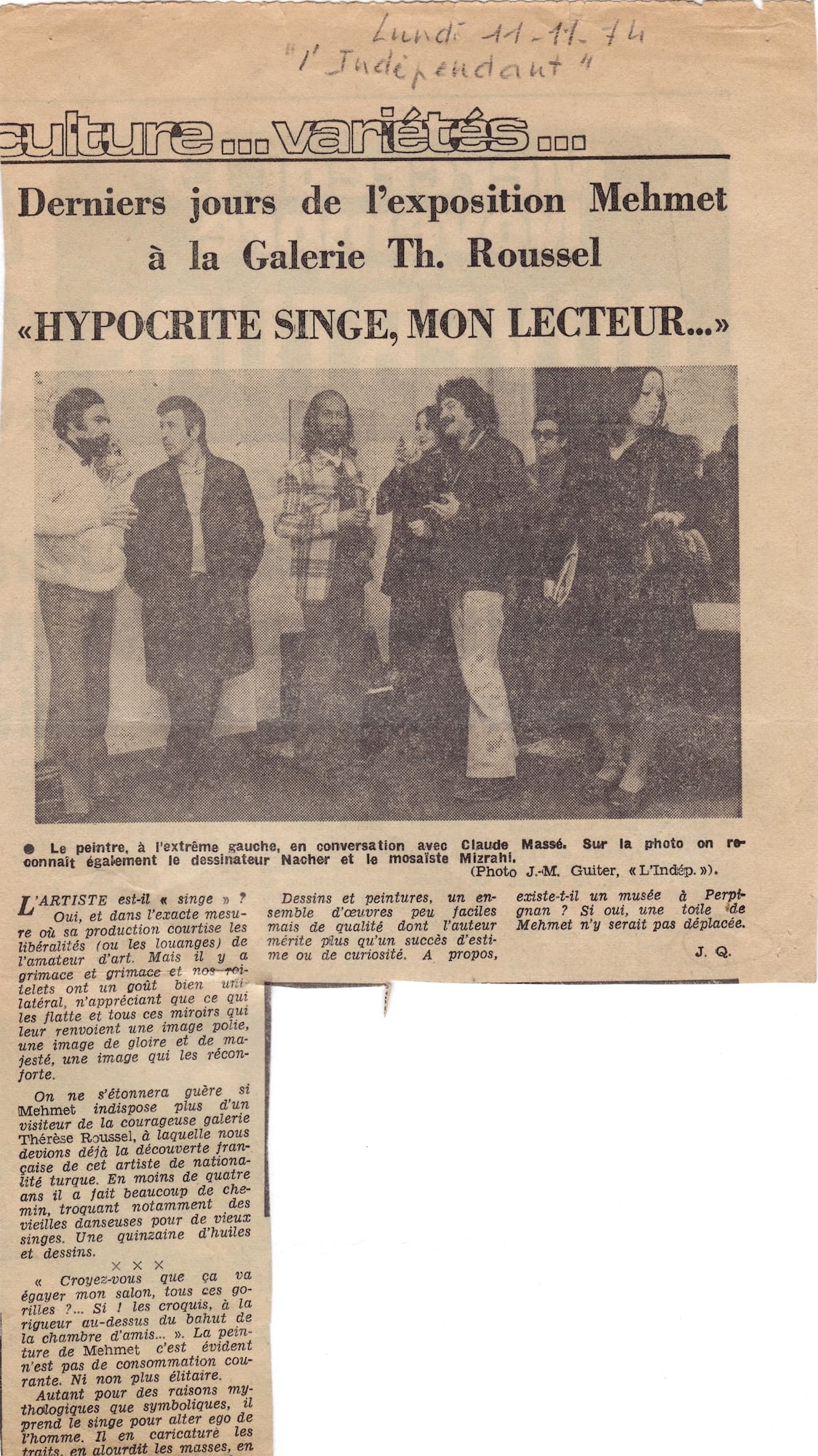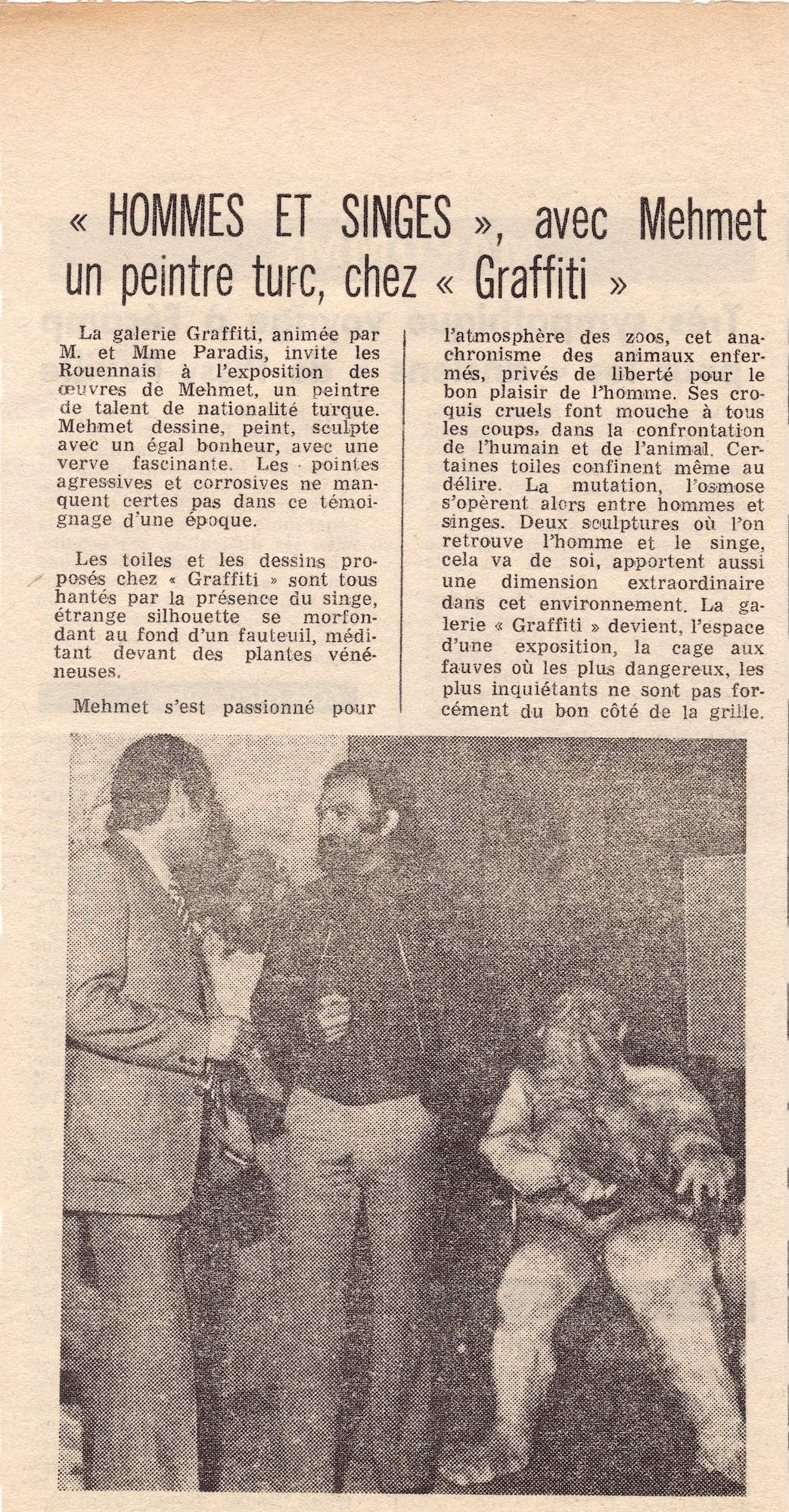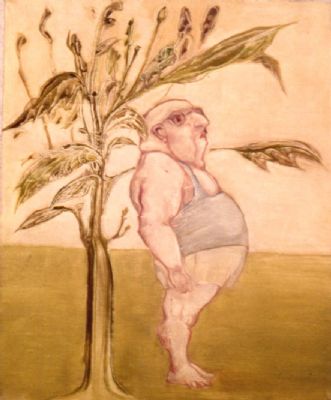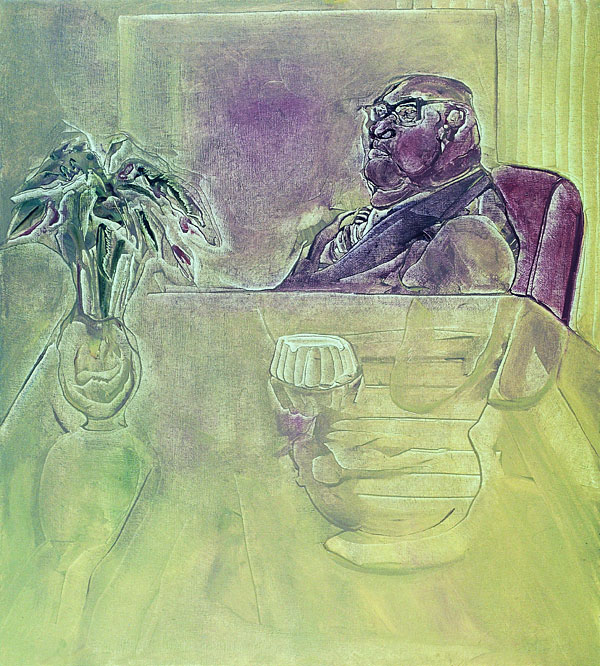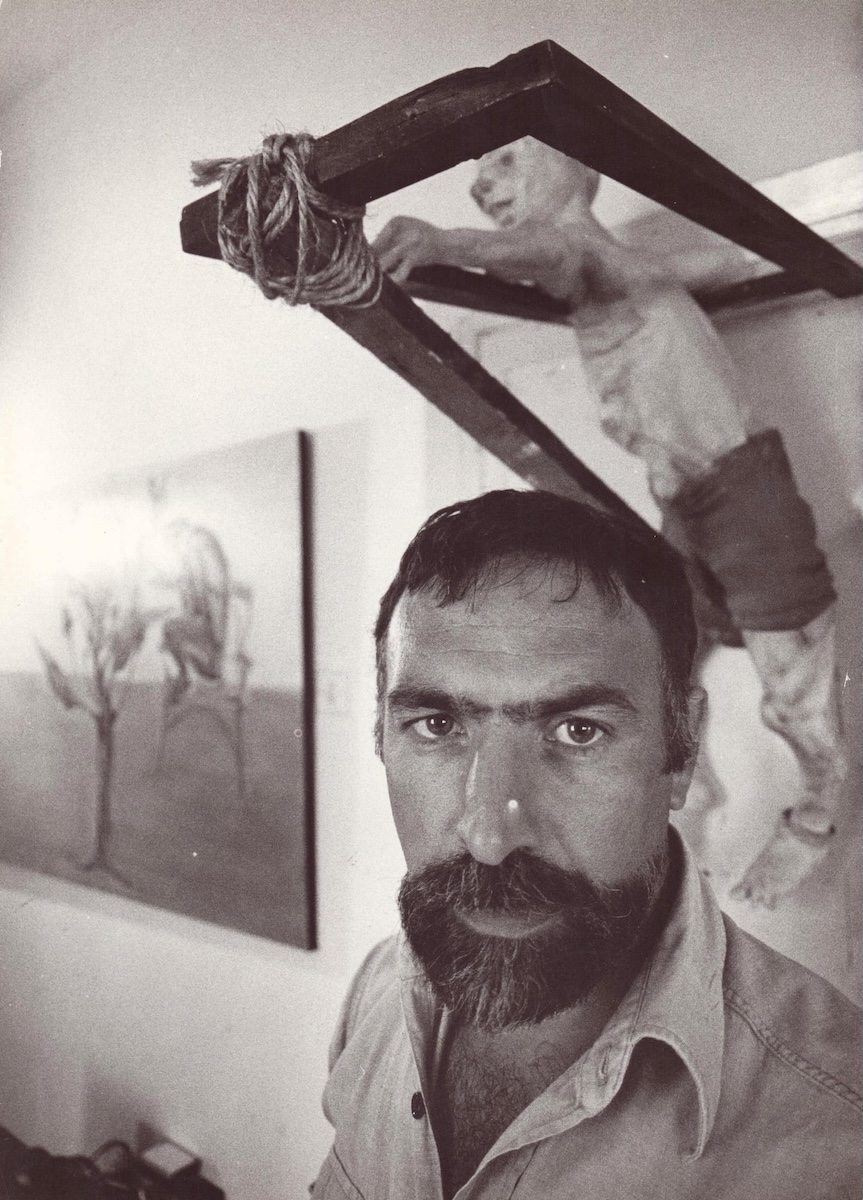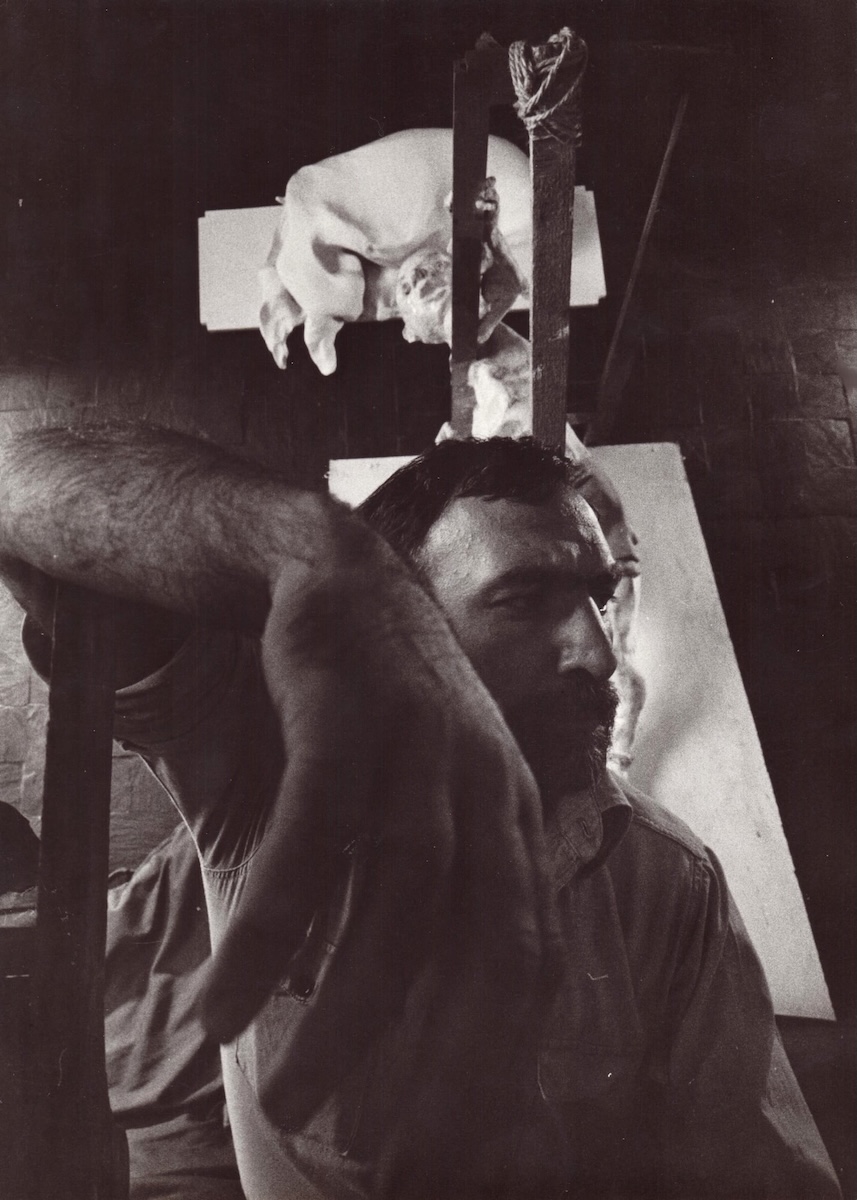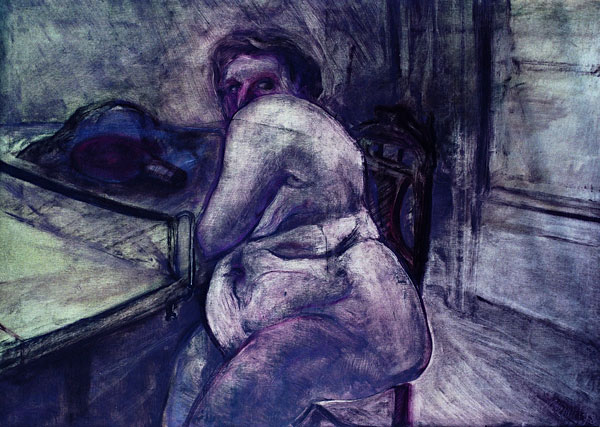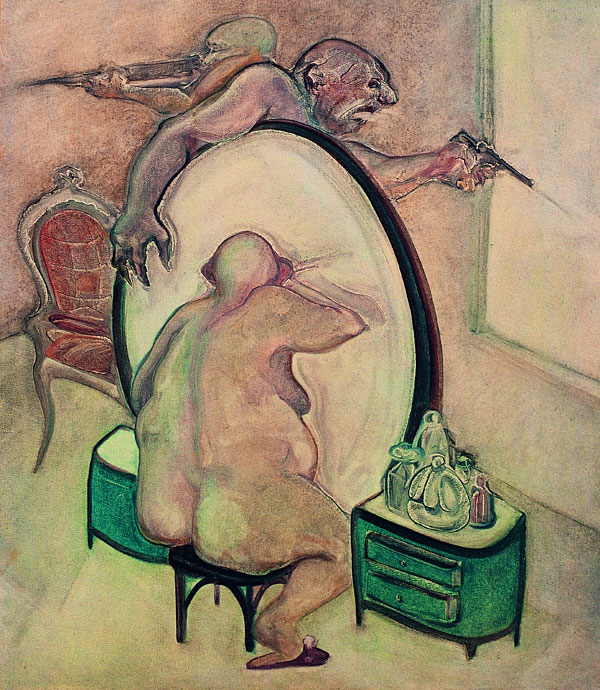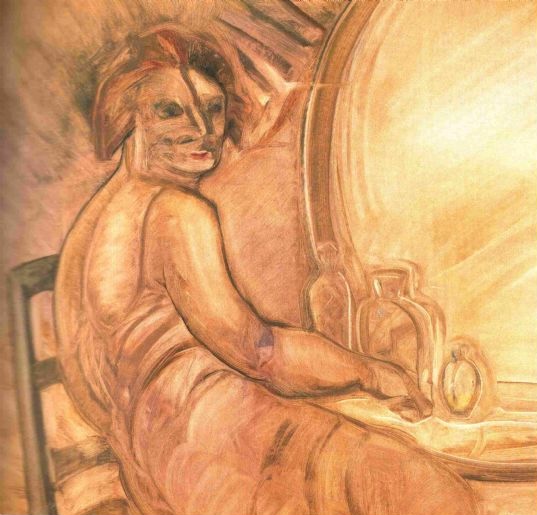
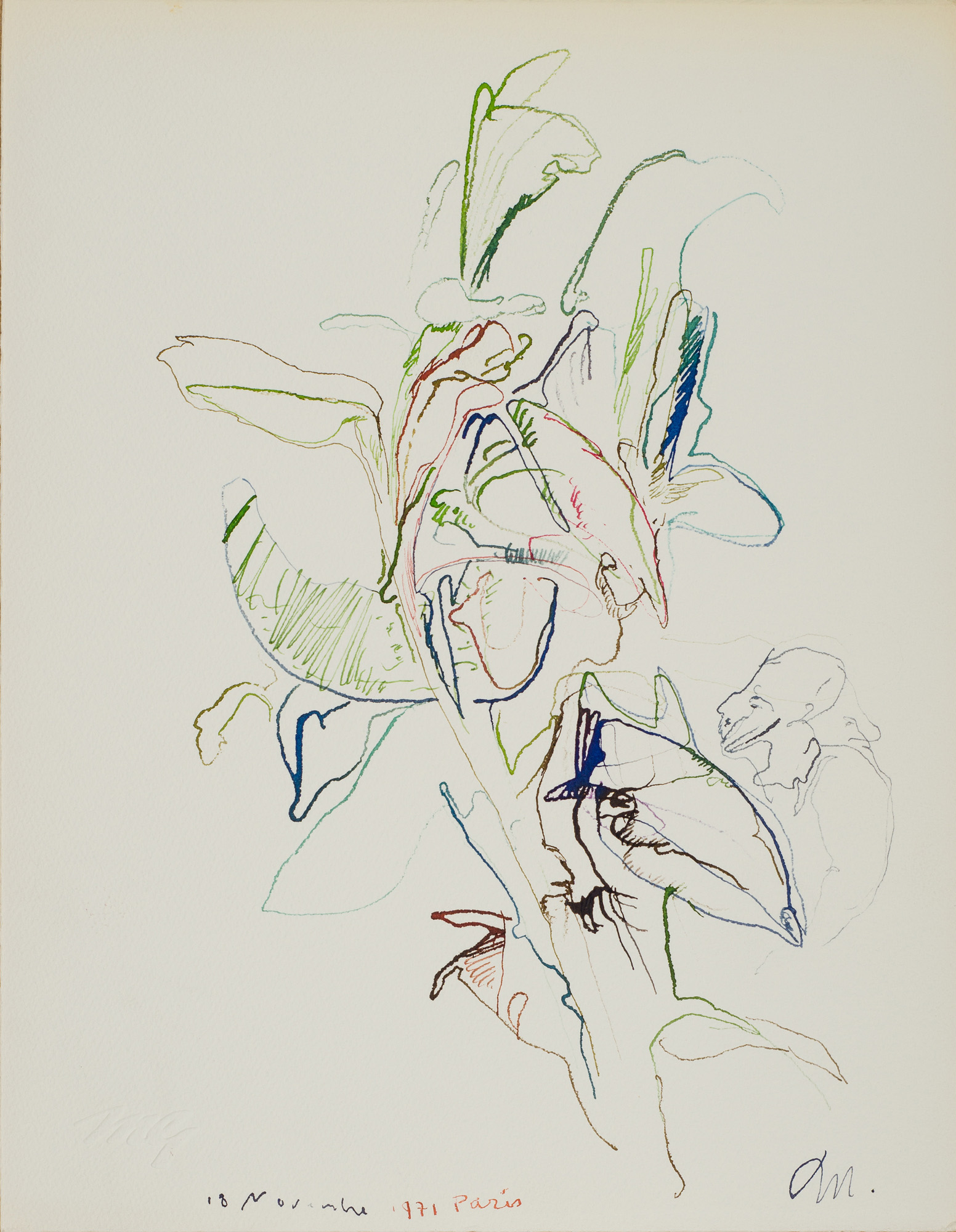
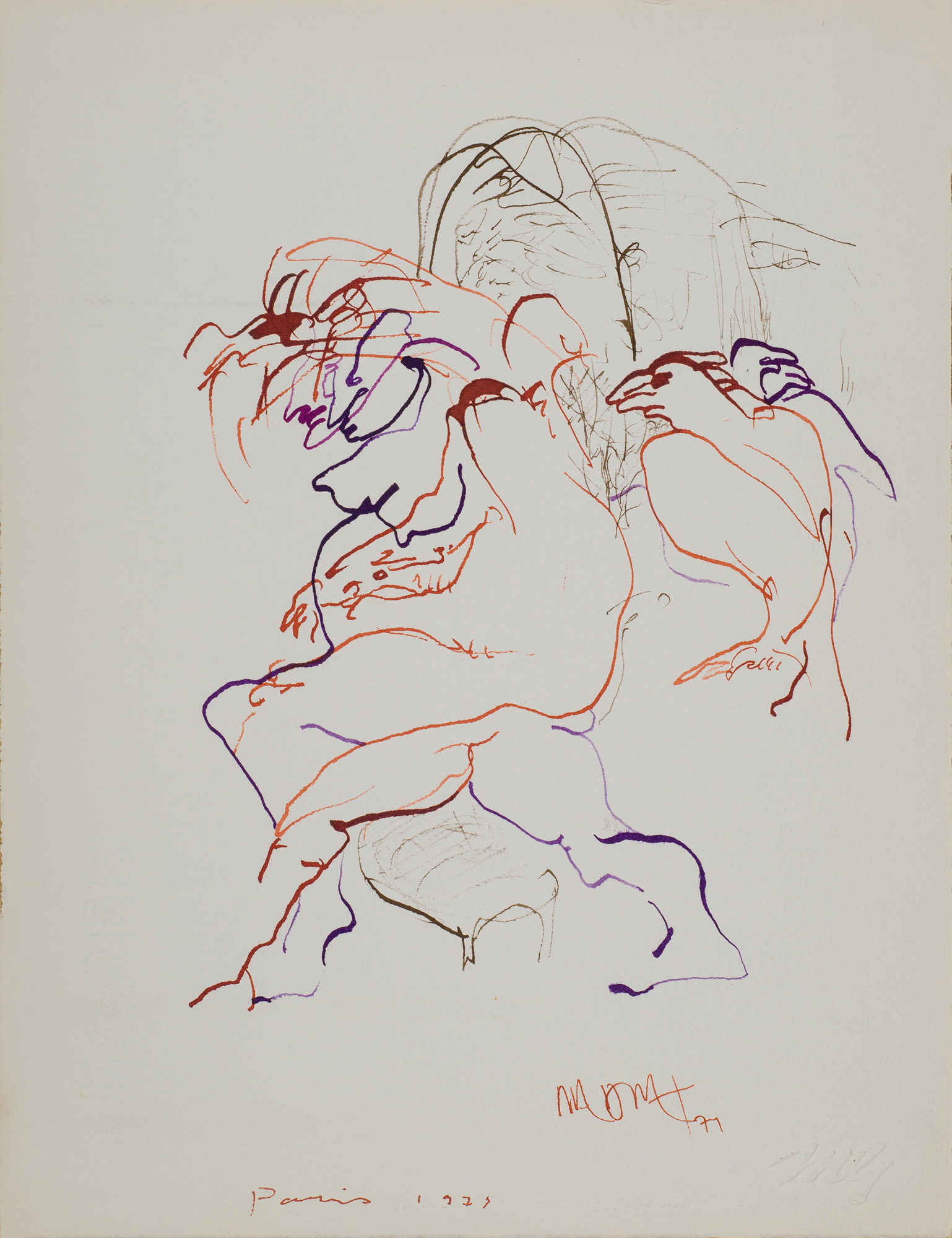
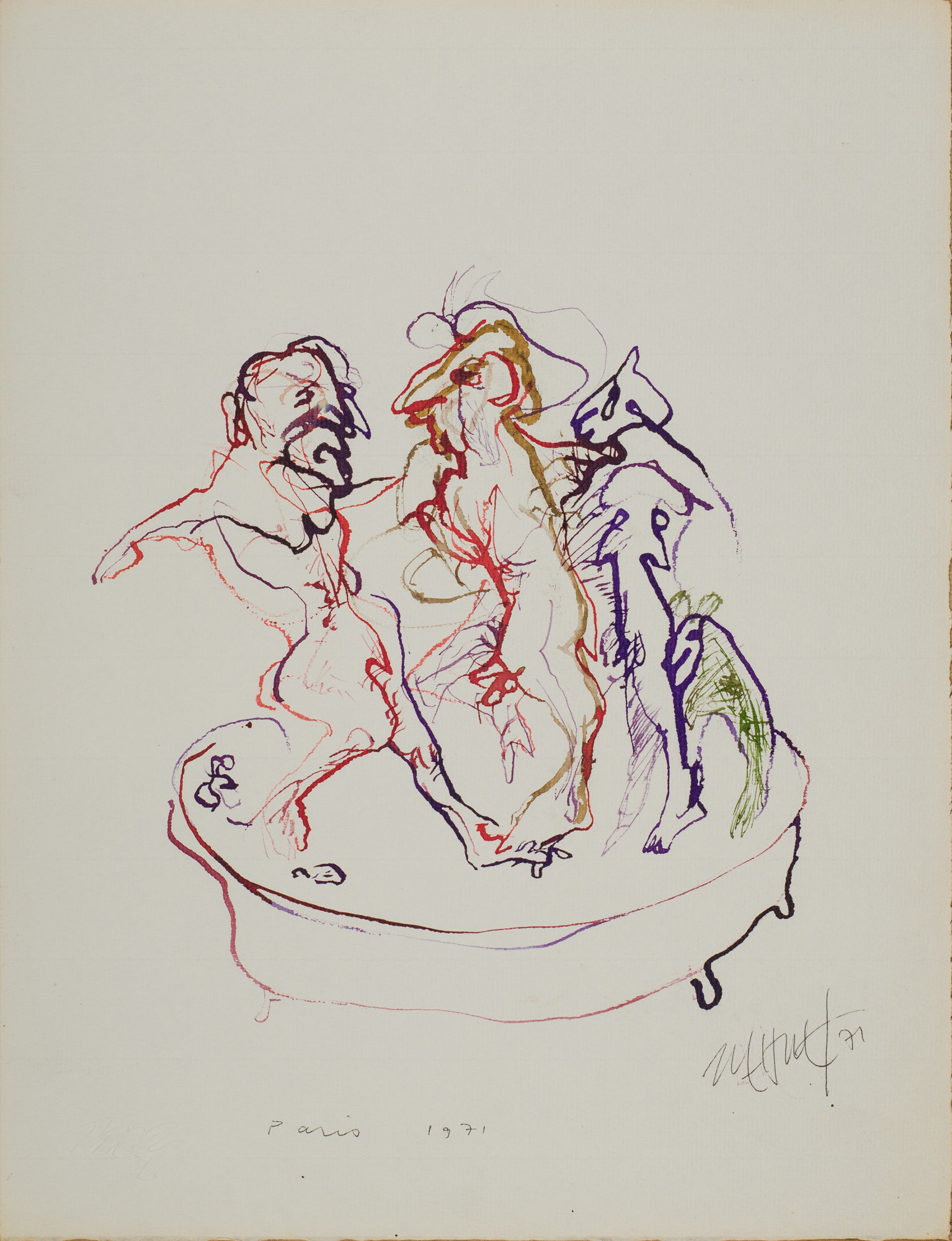
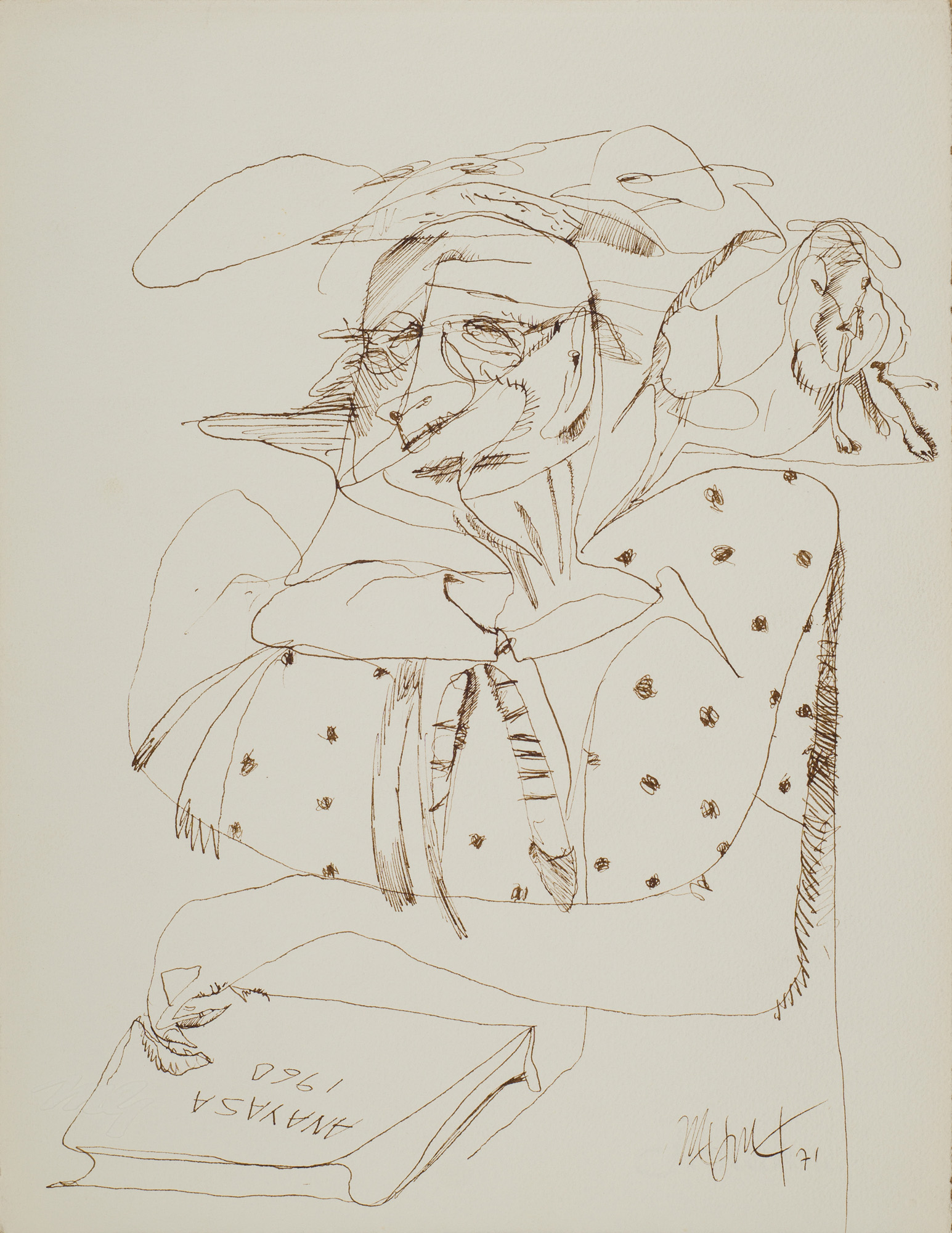
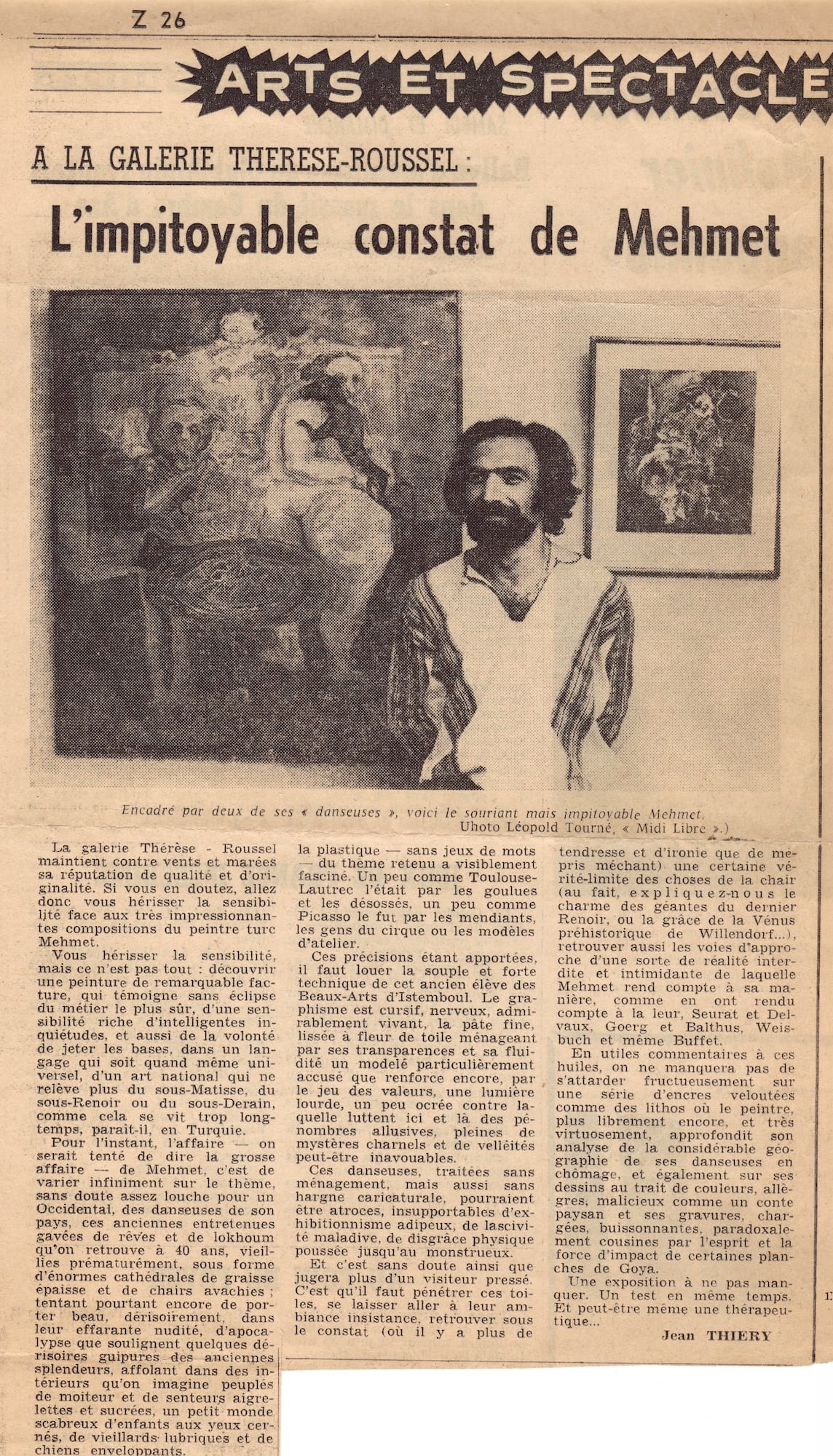
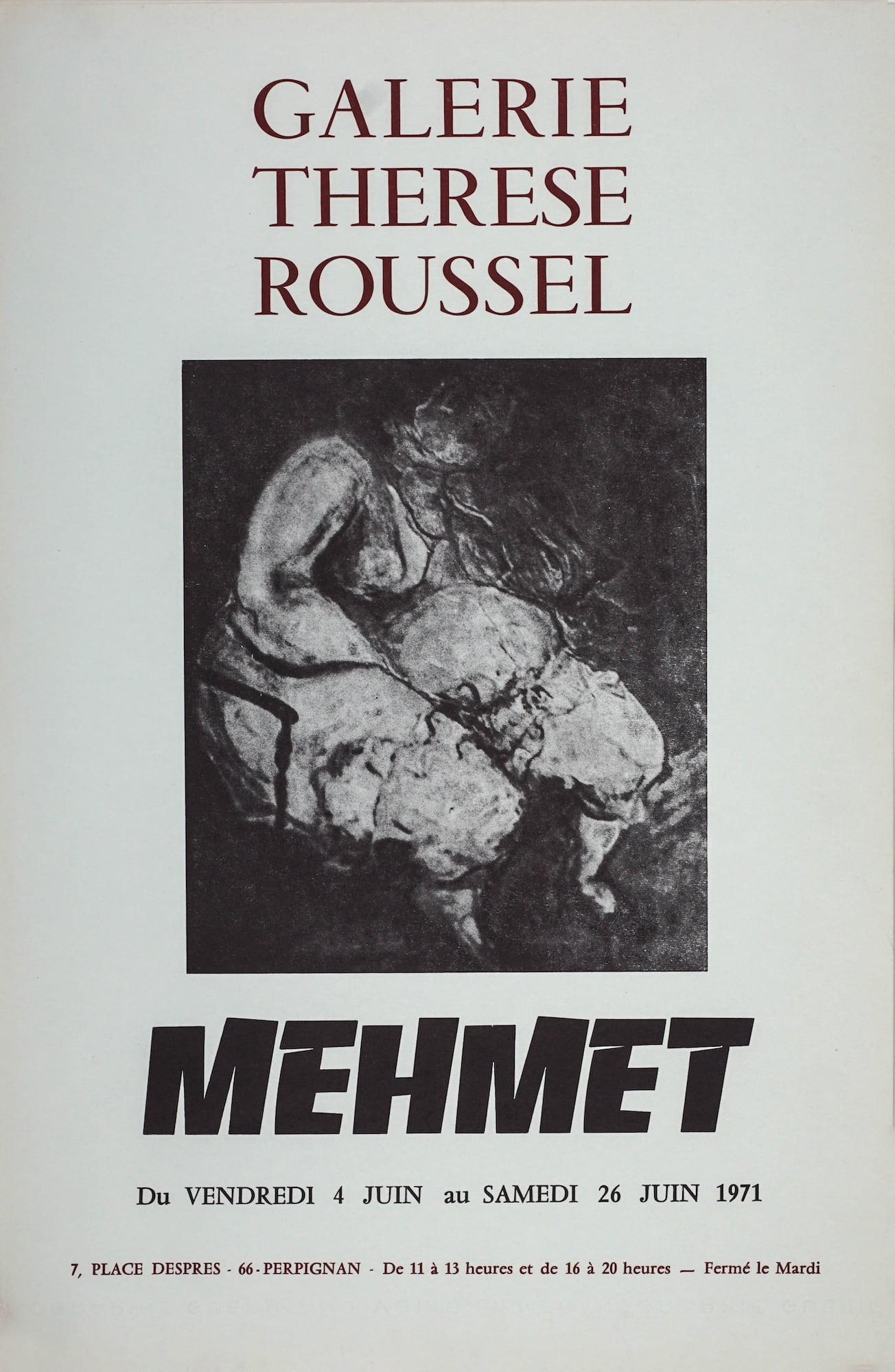
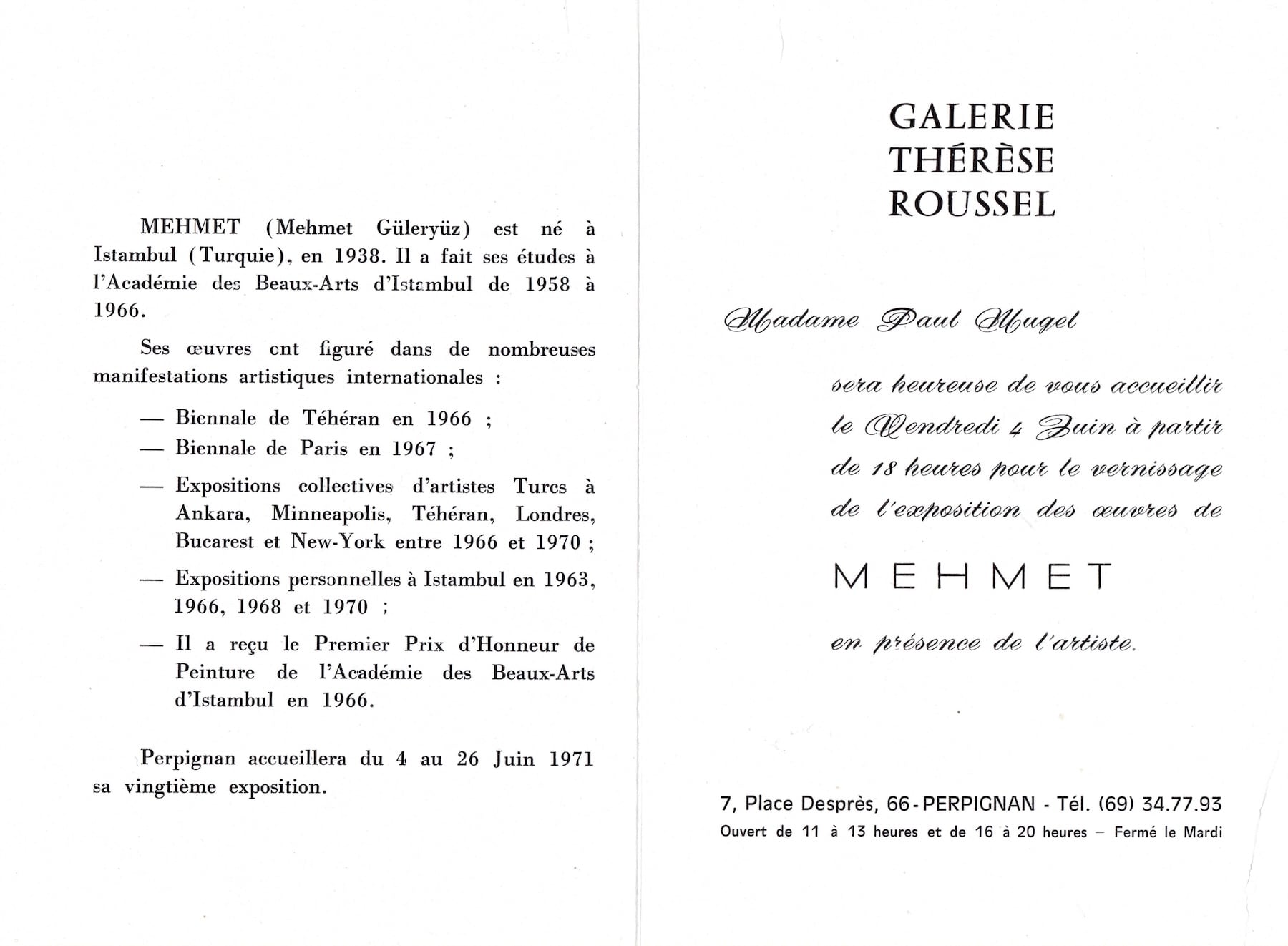
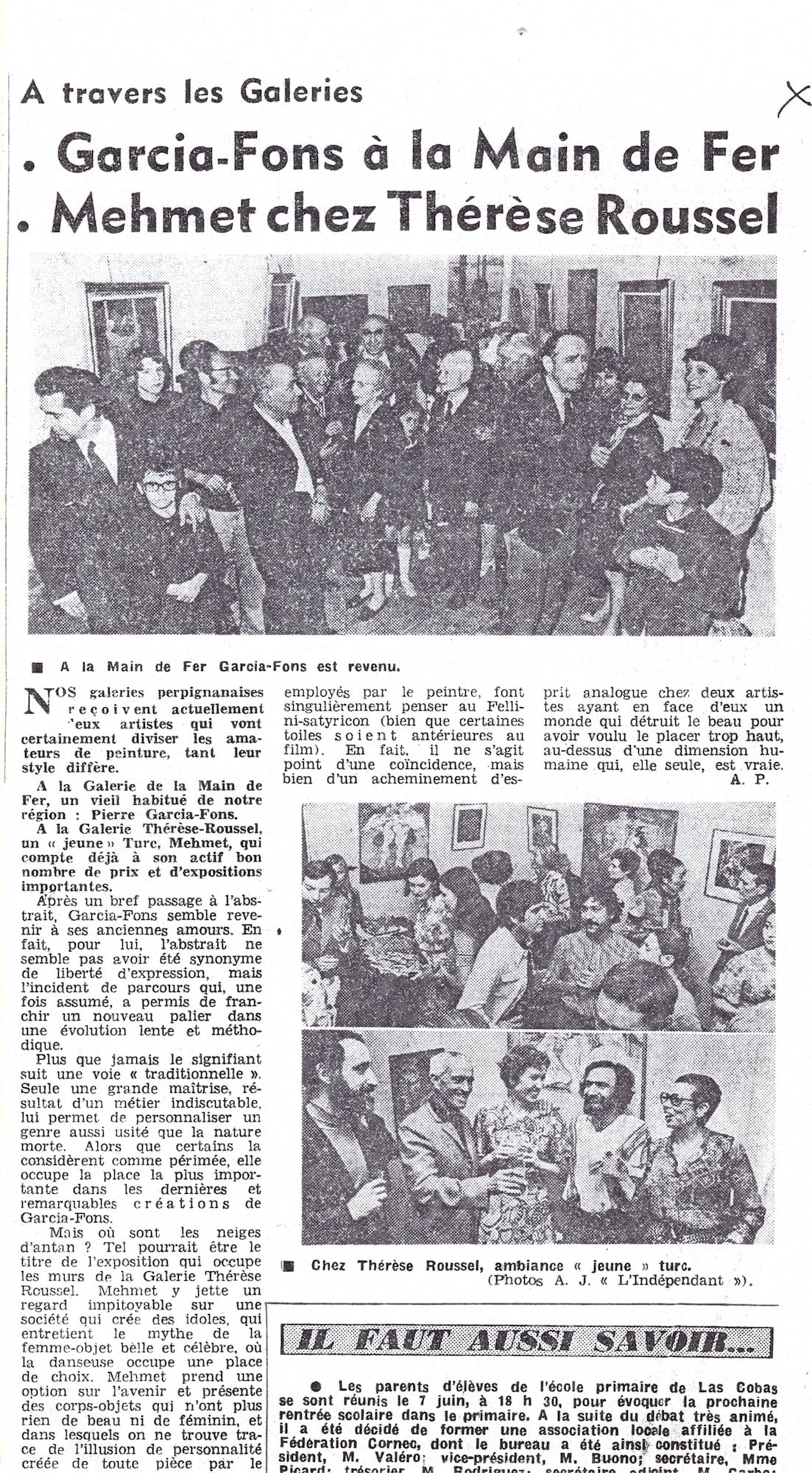
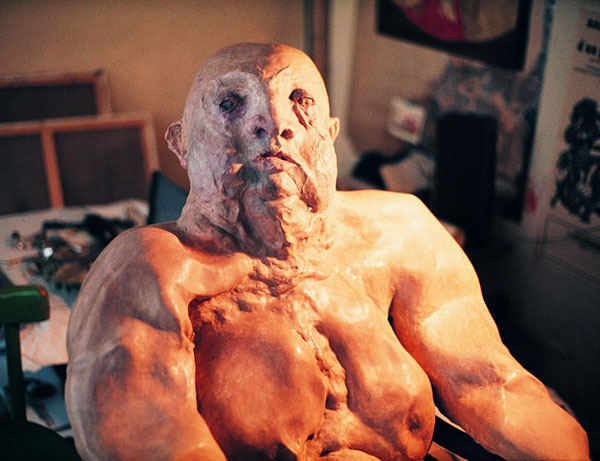
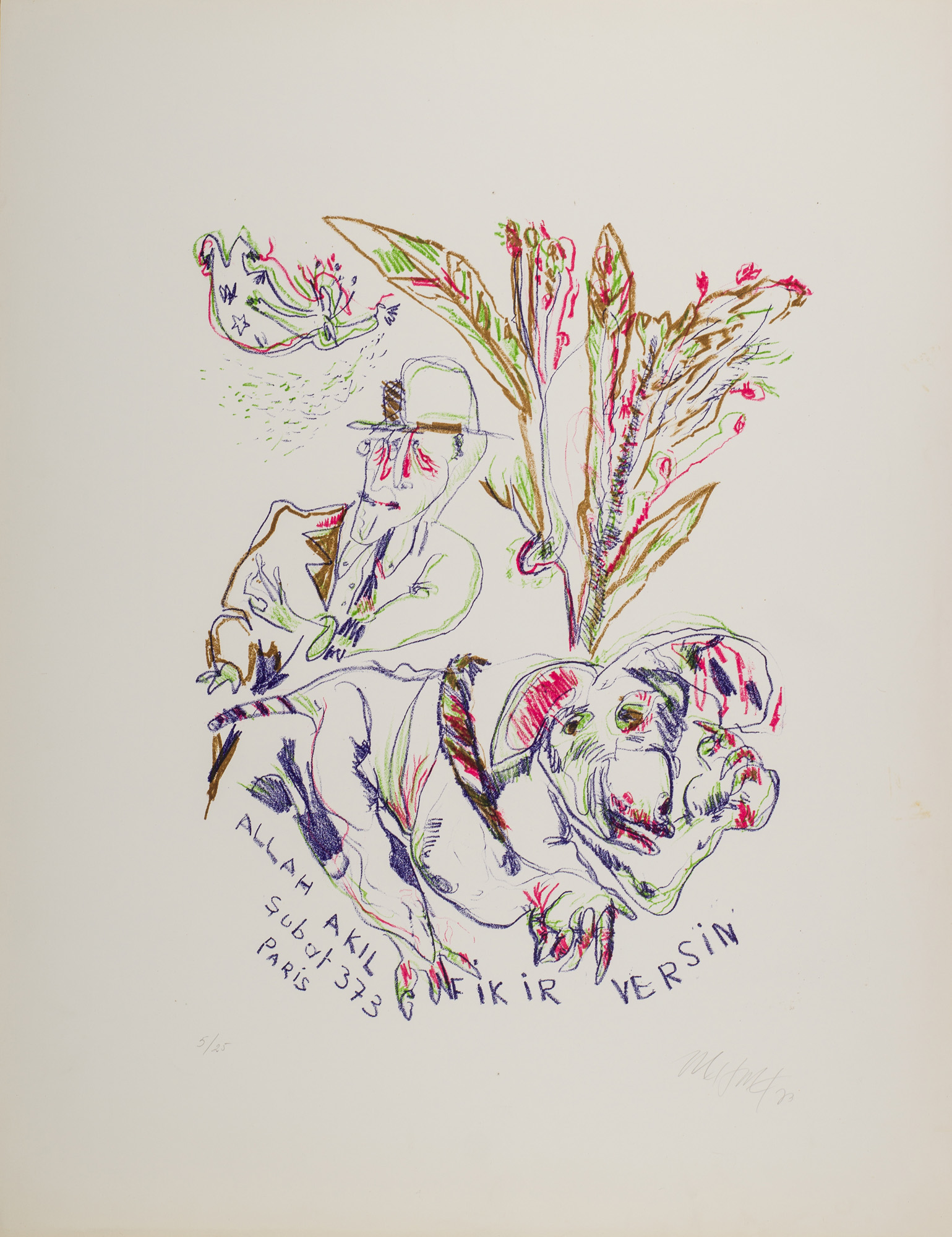
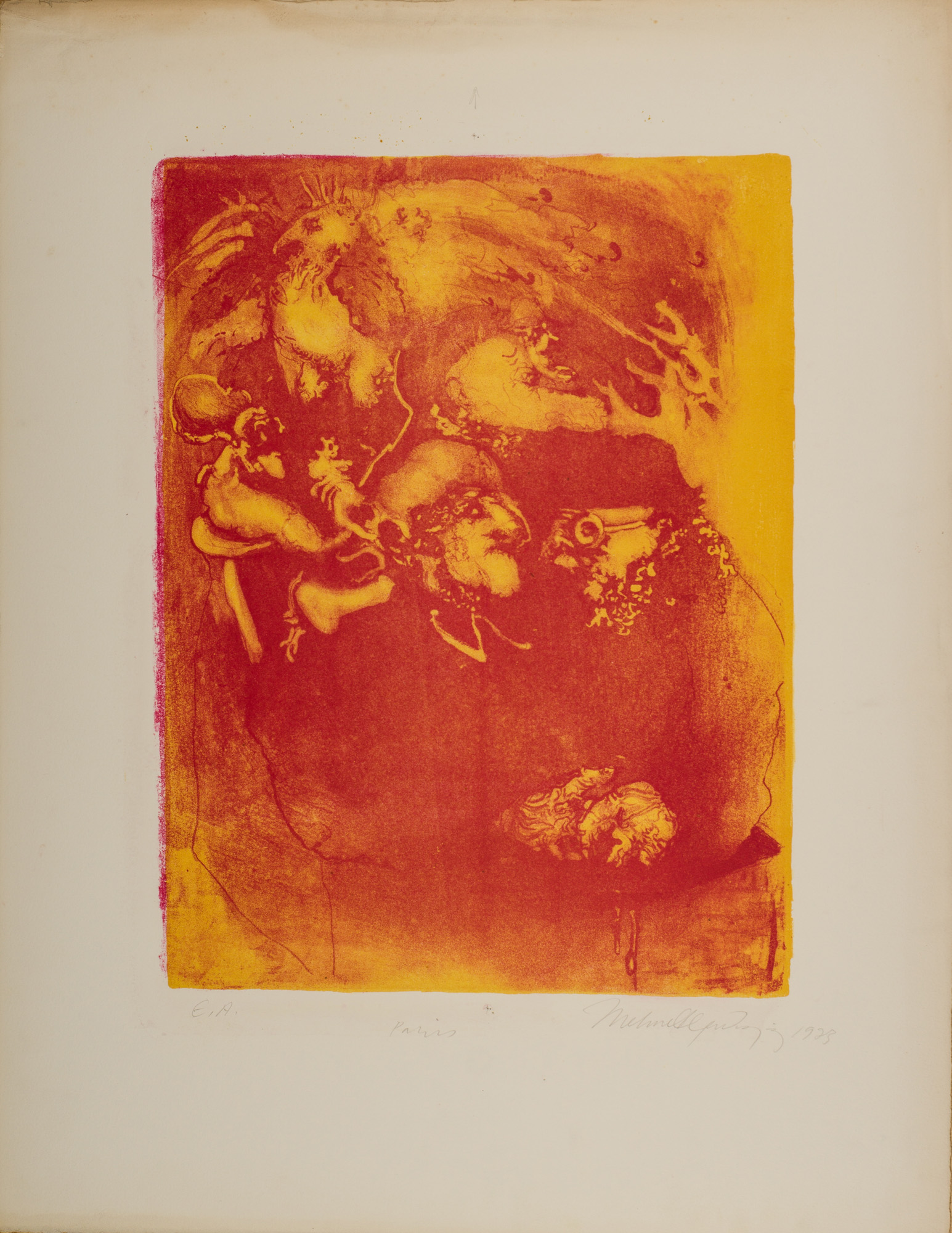
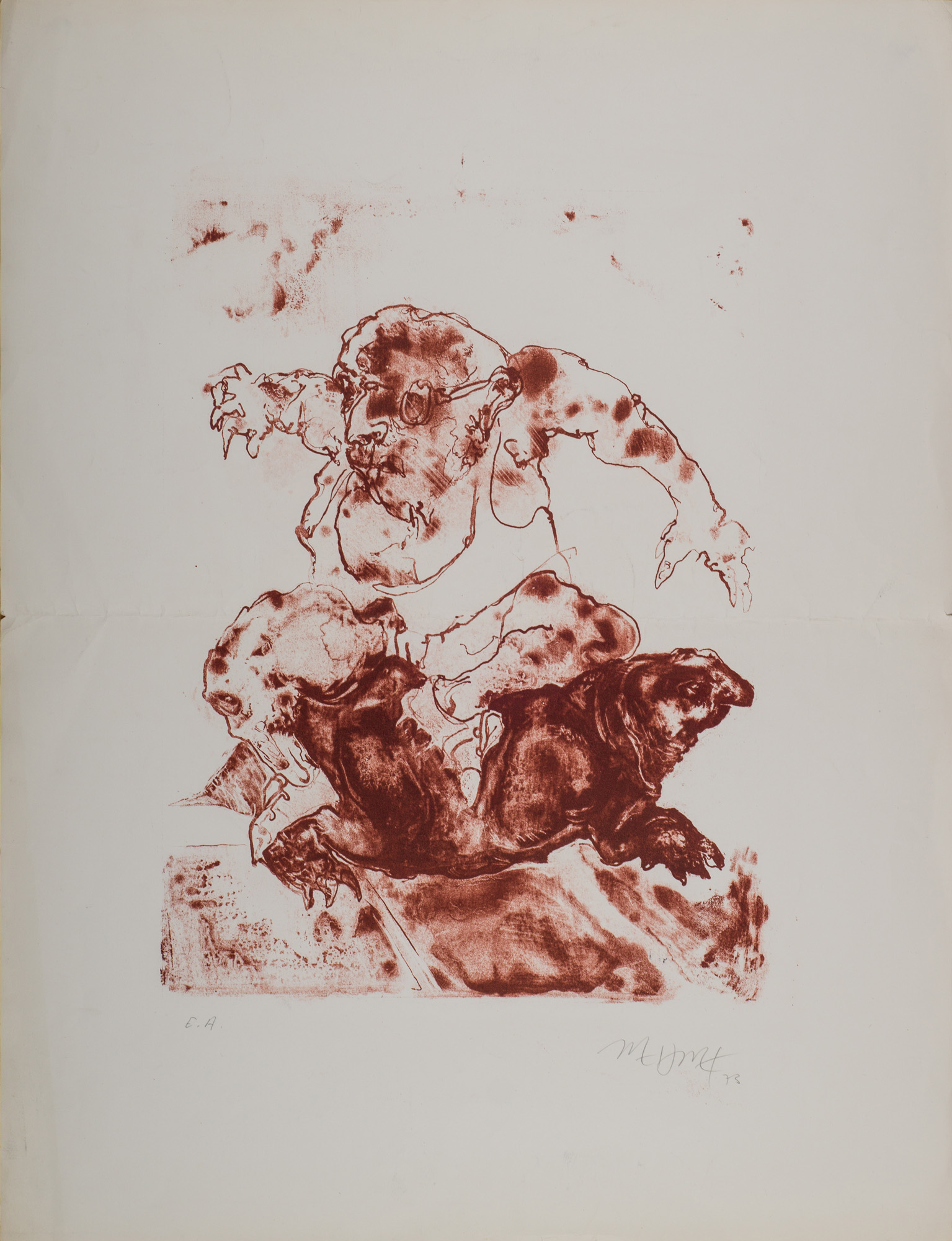
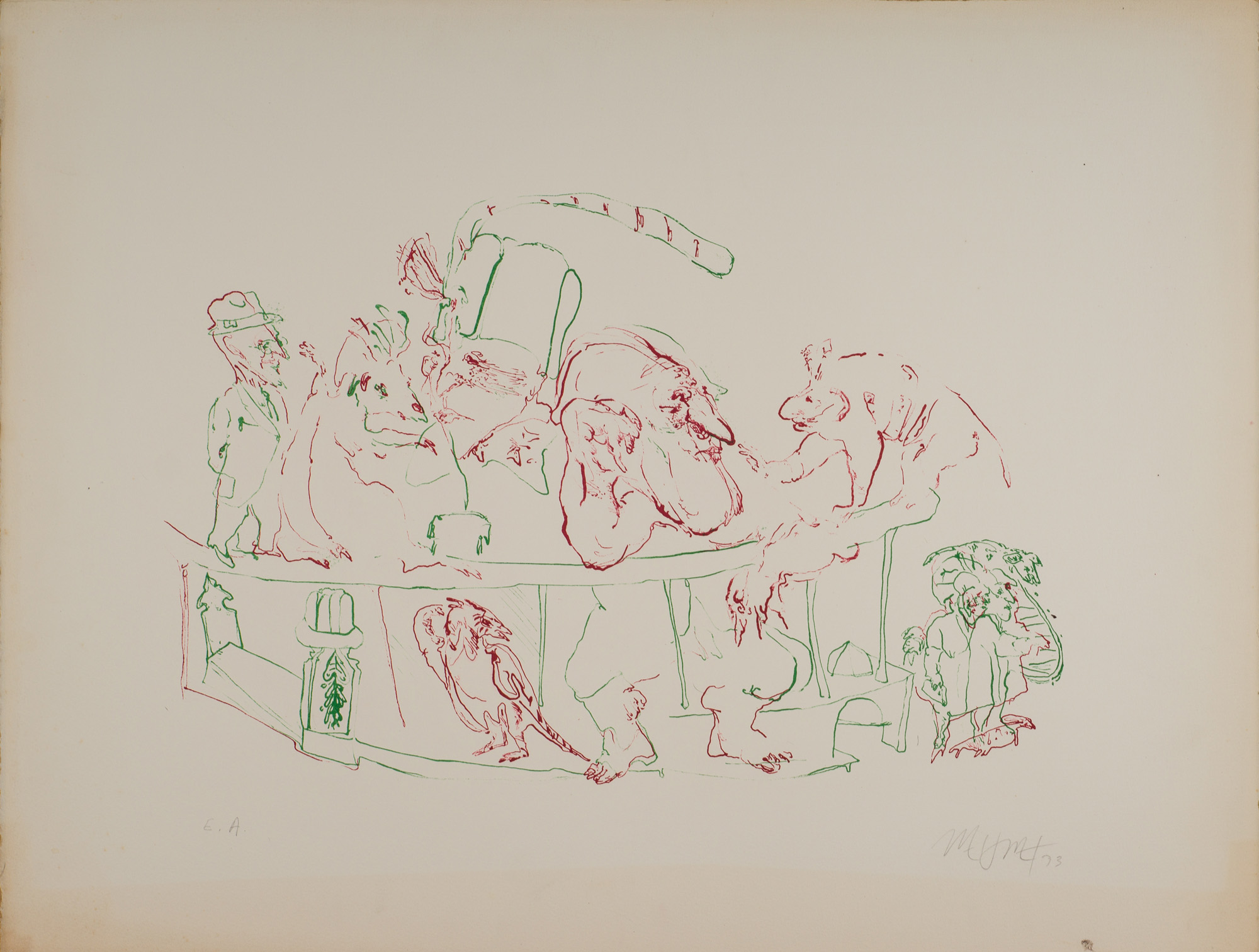
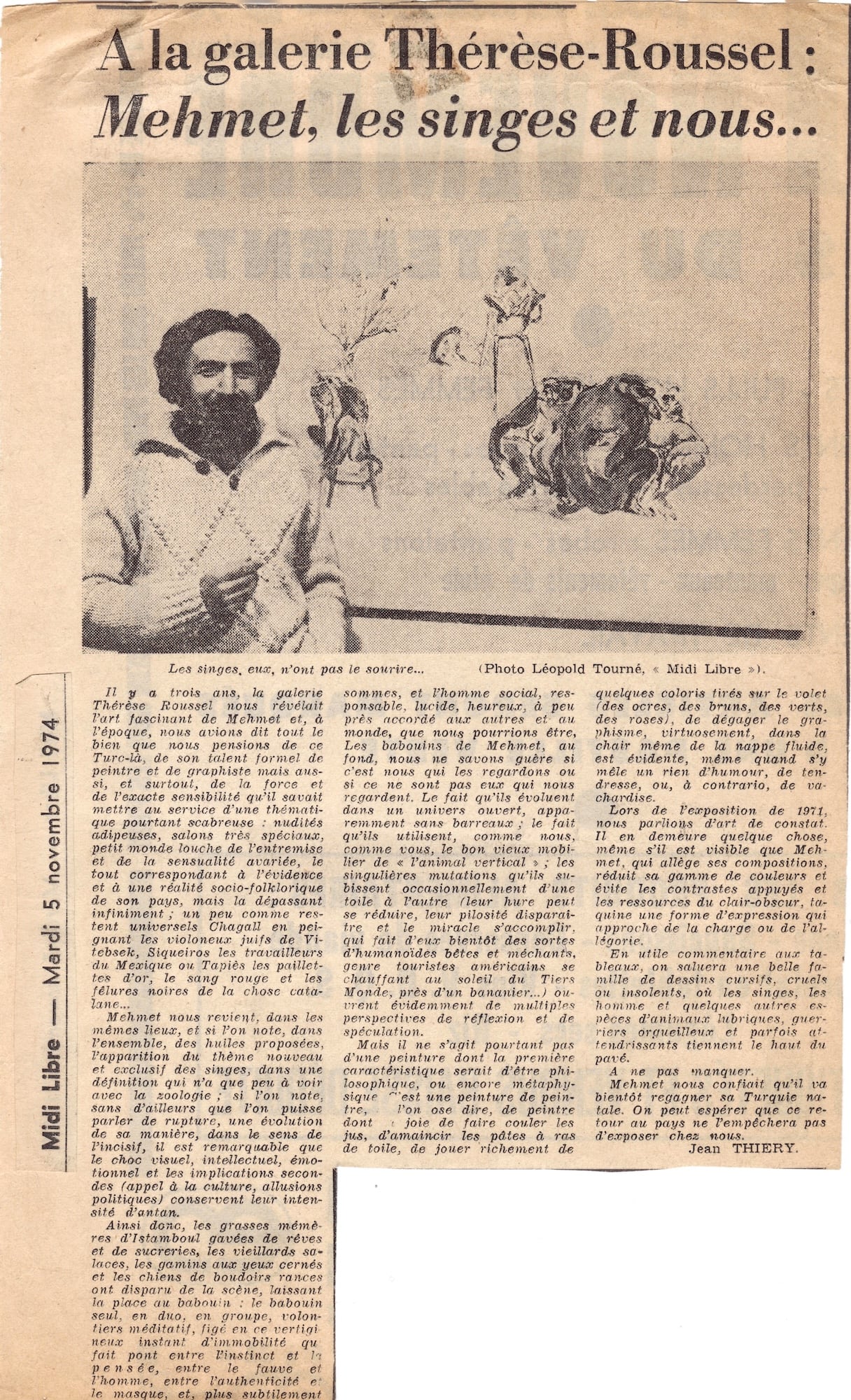
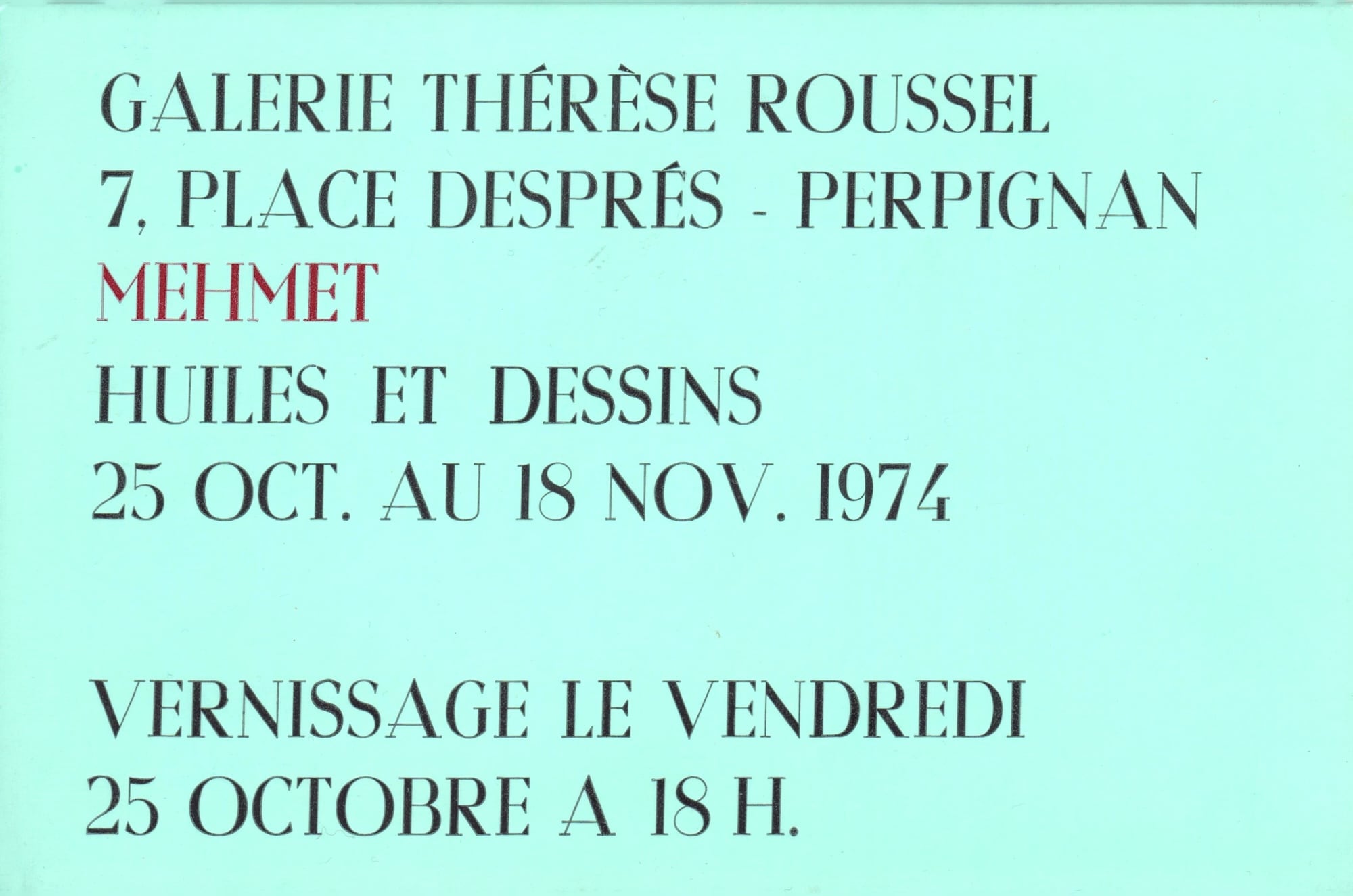
Three years ago, the Galerie Thérèse Roussel introduced us to the fascinating art of Mehmet, and at the time we expressed all the admiration we felt for this Turkish artist—both for his formal talent as a painter and graphic artist, but also, and above all, for the strength and precise sensitivity he brought to a subject matter that was nevertheless rather unsavory: corpulent nudes, very special salons, a shady little world of matchmaking and tainted sensuality—all of which clearly reflected a socio-folkloric reality of his country, yet transcended it infinitely; much as Chagall’s Jewish fiddlers of Vitebsk, Siqueiros’ Mexican workers, or Tapiès’ golden flecks, red blood, and black fissures of Catalan matter remain universal...
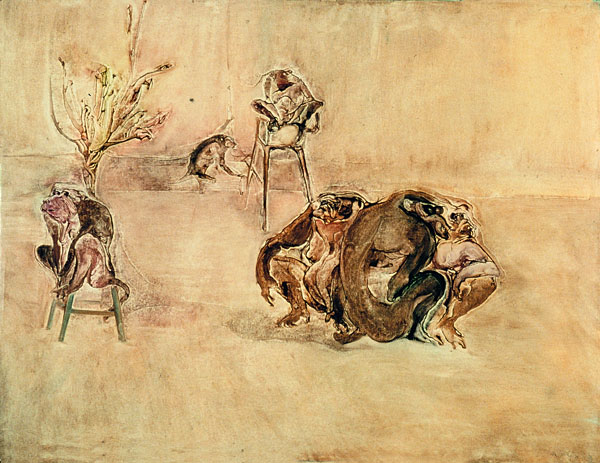
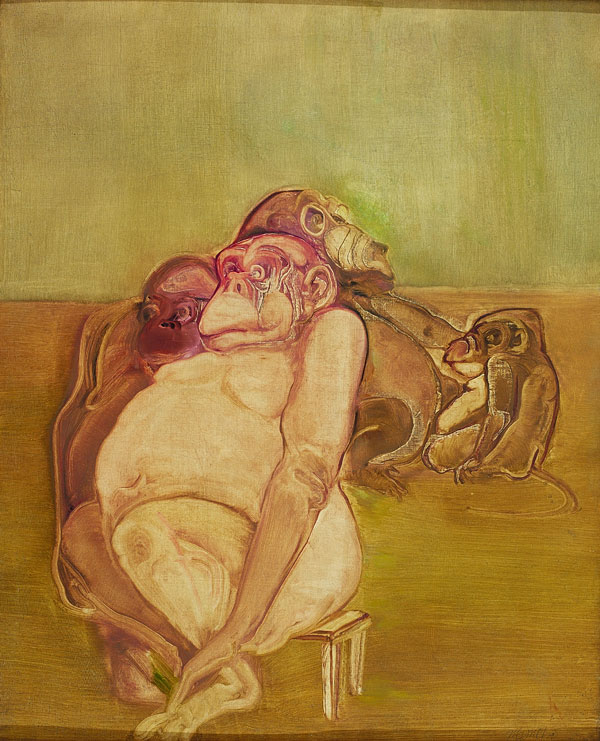
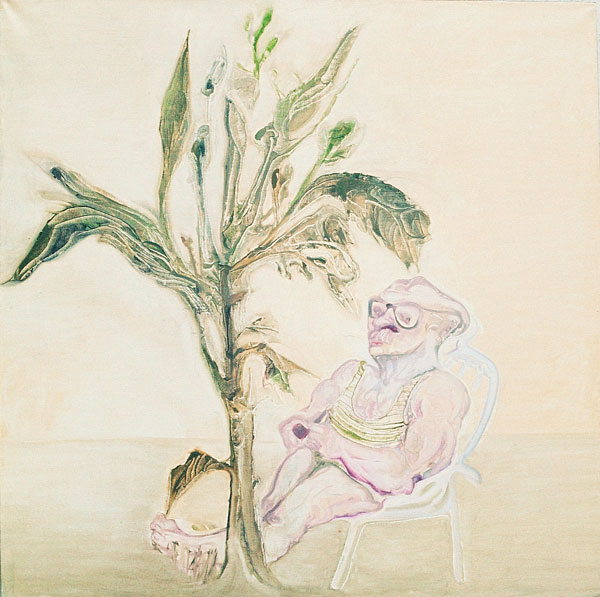
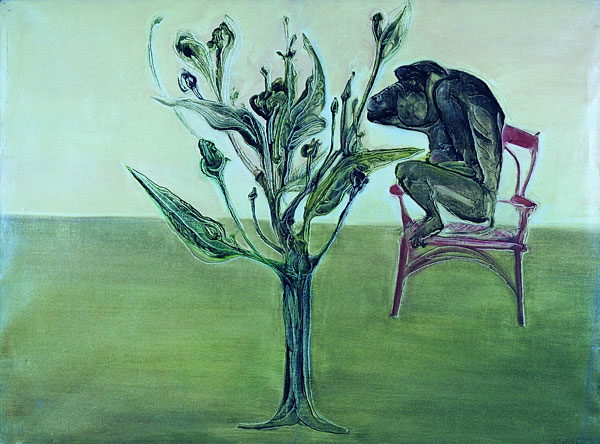
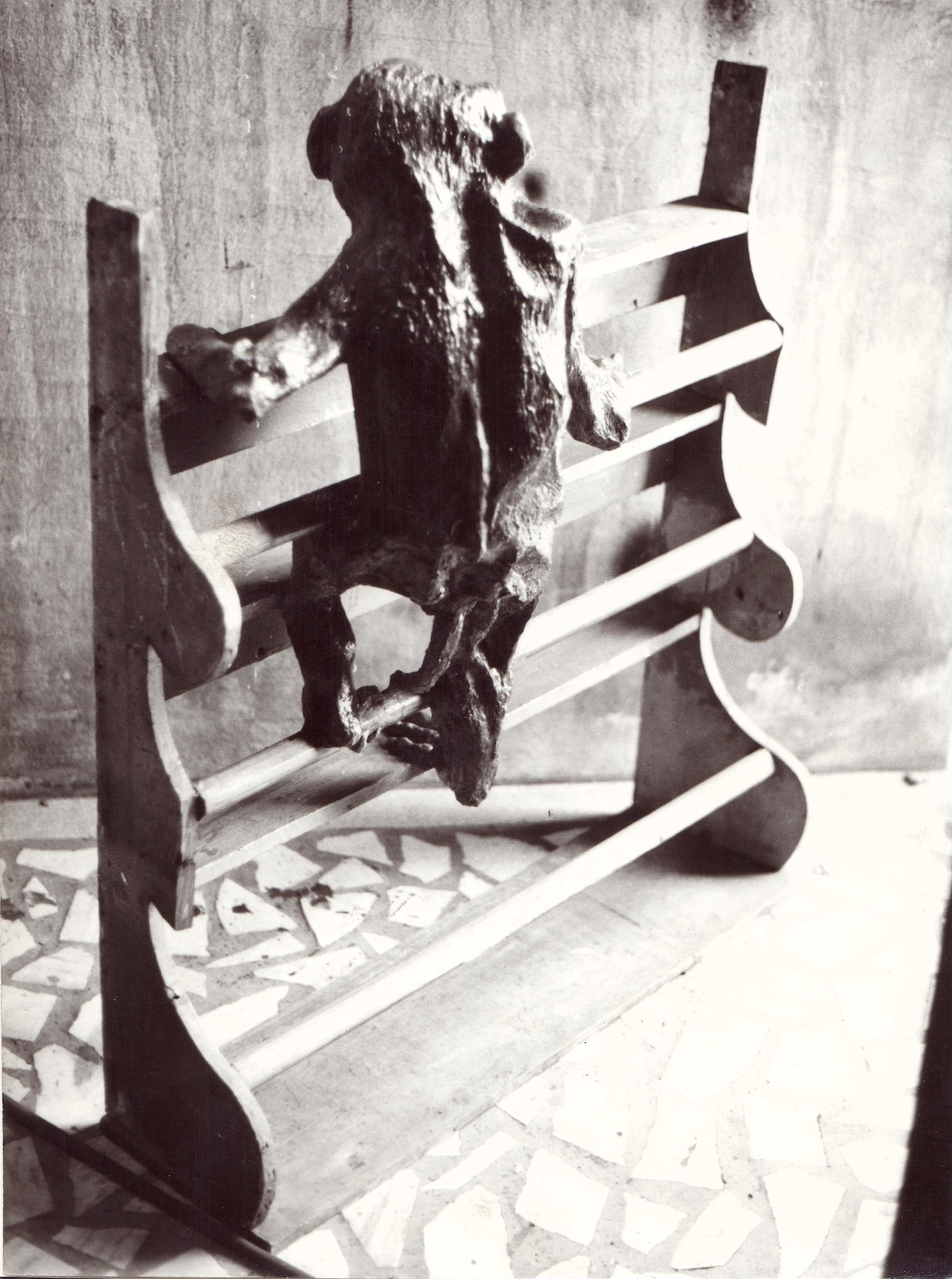
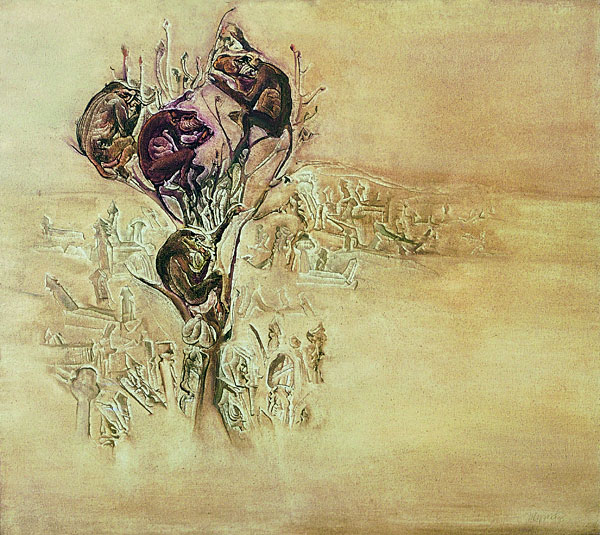
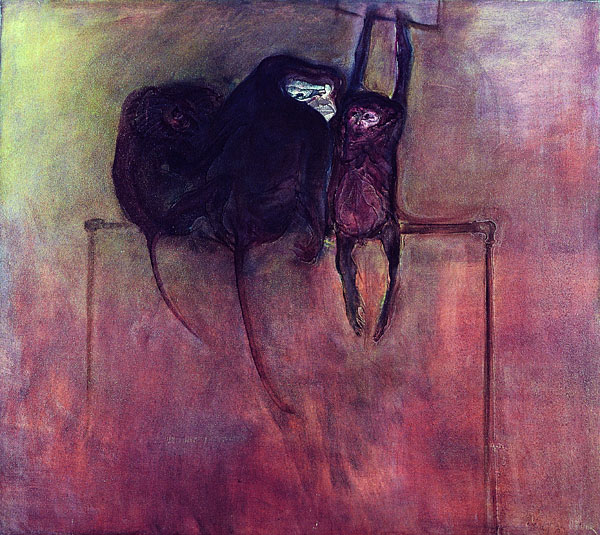
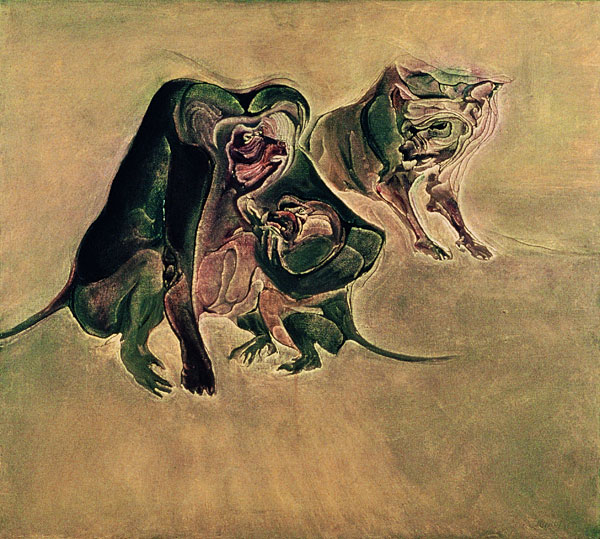
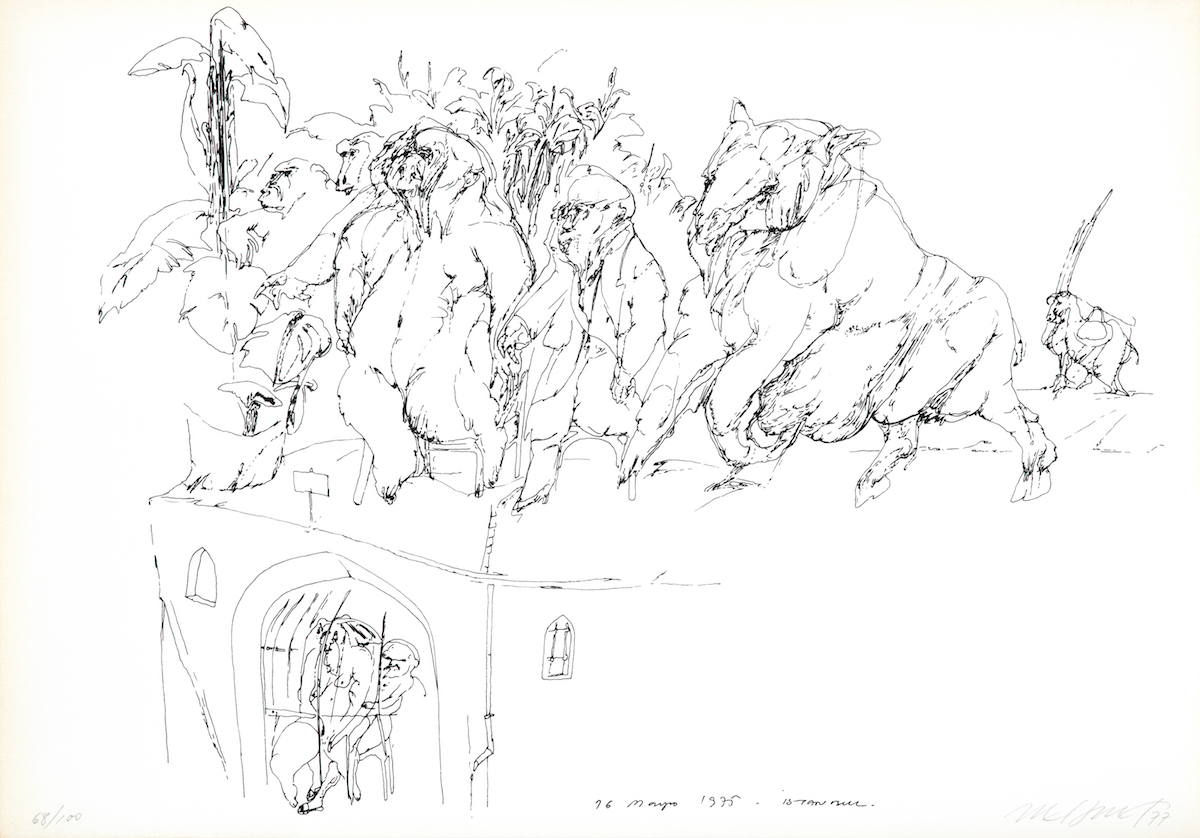
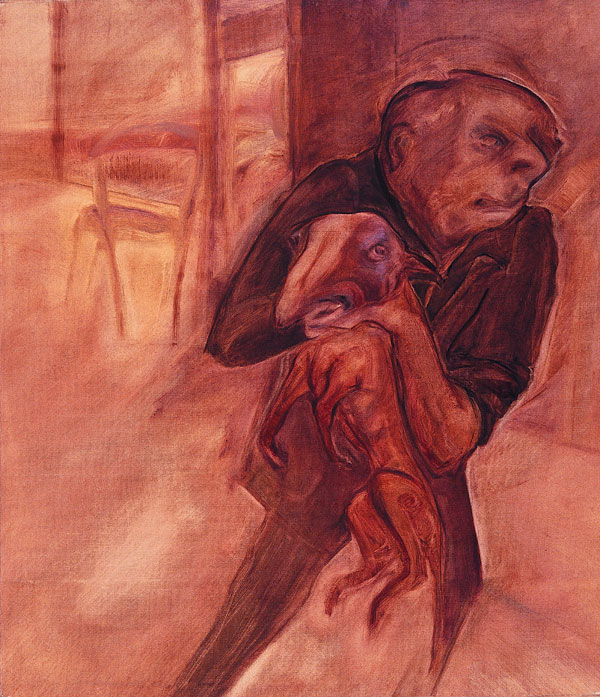
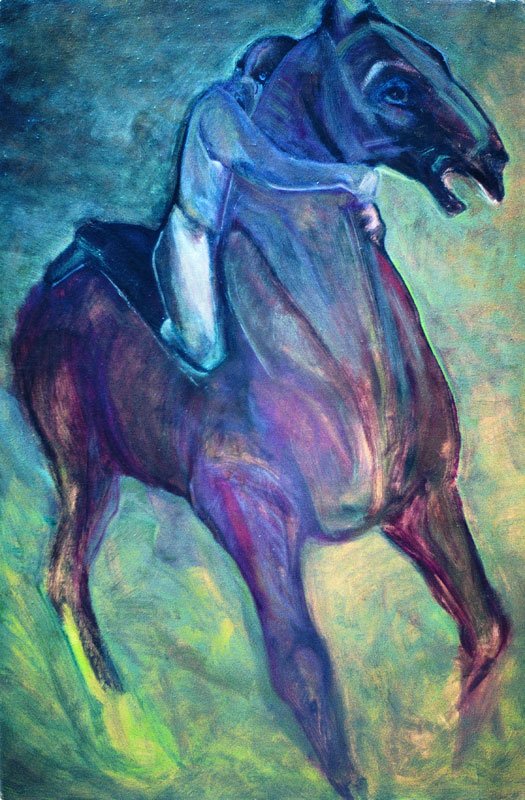
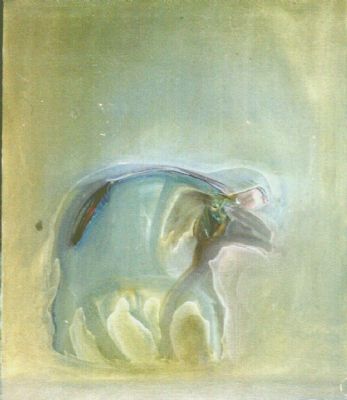
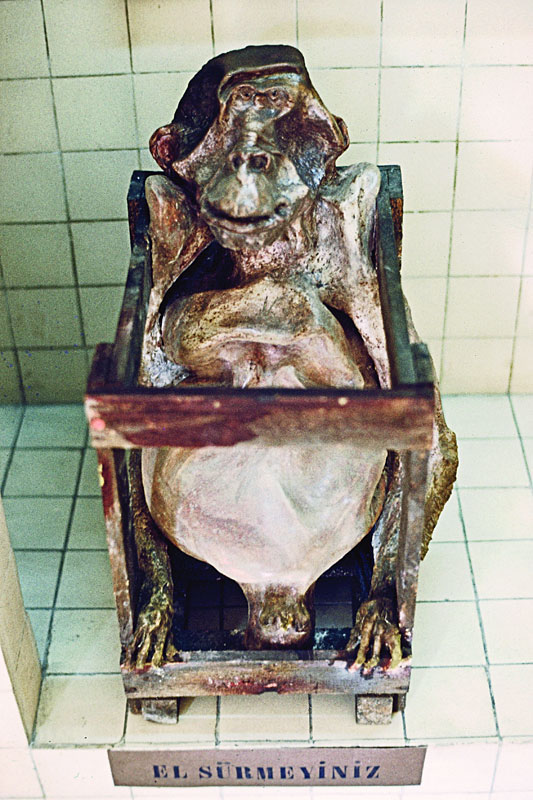
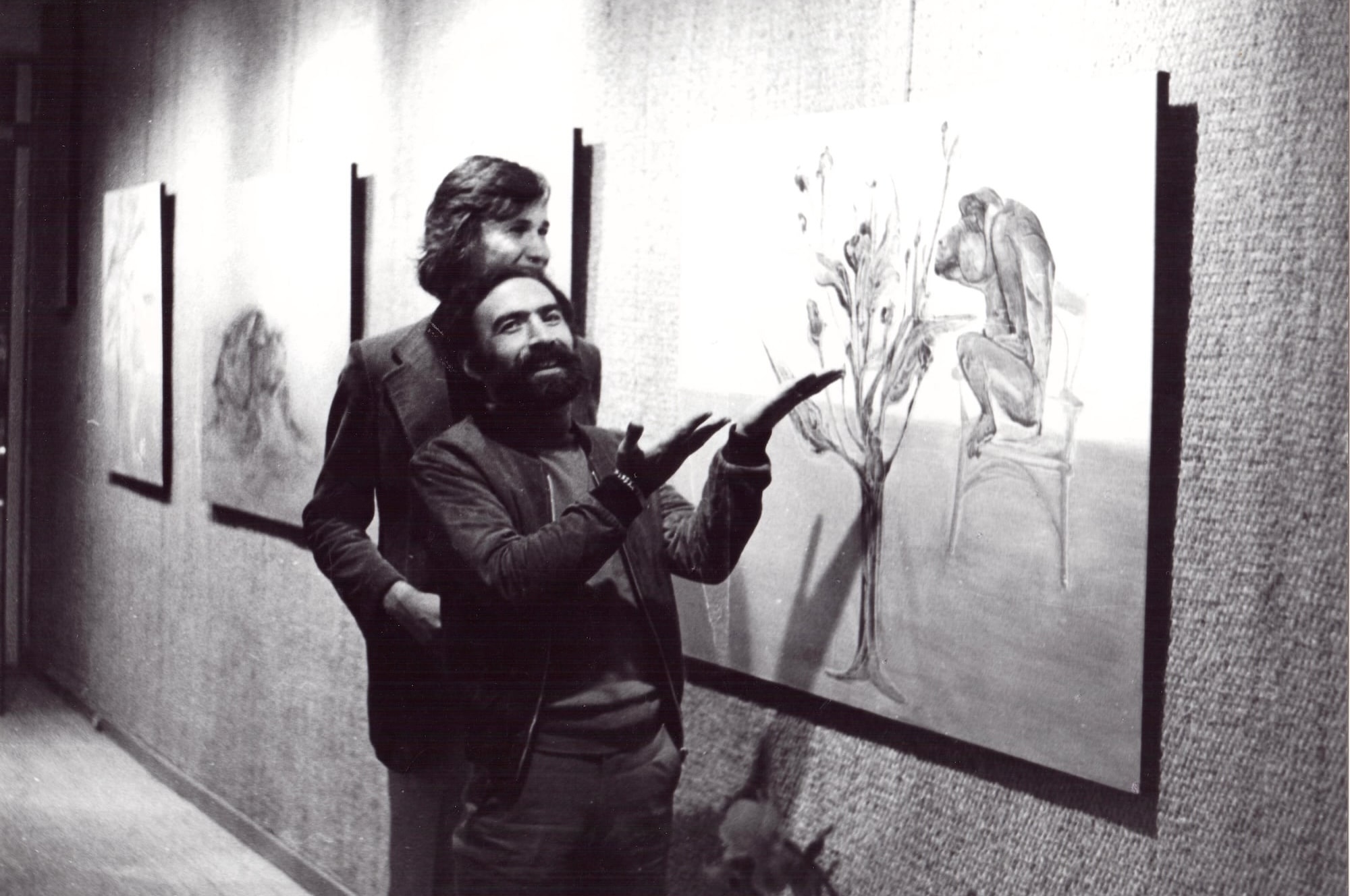
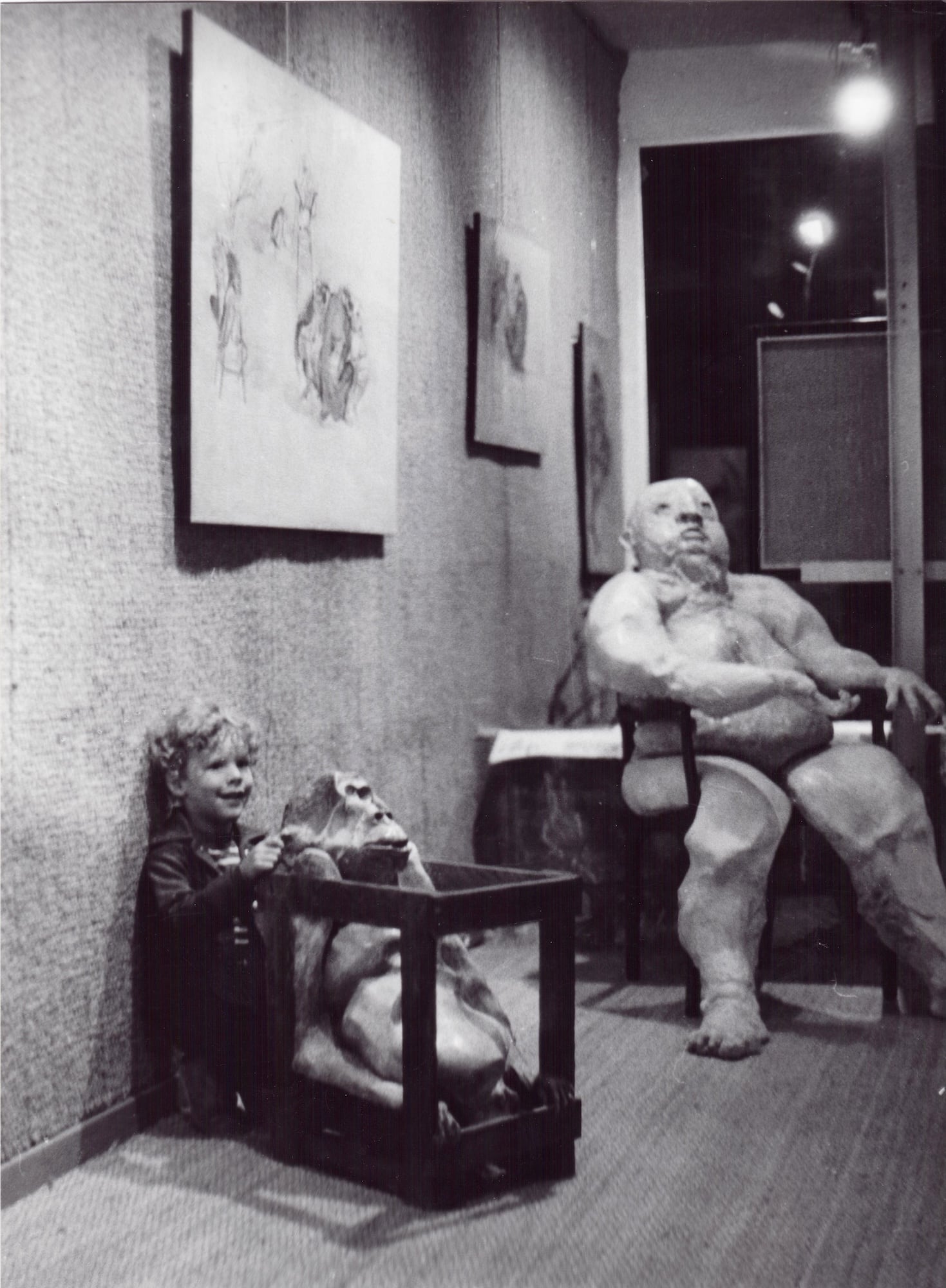
Mehmet returns to us, in the same venue, and while one notes, overall, among the oils on display, the emergence of a new and exclusive theme—monkeys—defined in a way that has little to do with zoology; while one also observes, without being able to speak of a rupture, an evolution in his style toward greater incisiveness, it is remarkable that the visual, intellectual, and emotional impact—as well as the secondary implications (cultural references, political allusions)—retain their former intensity.
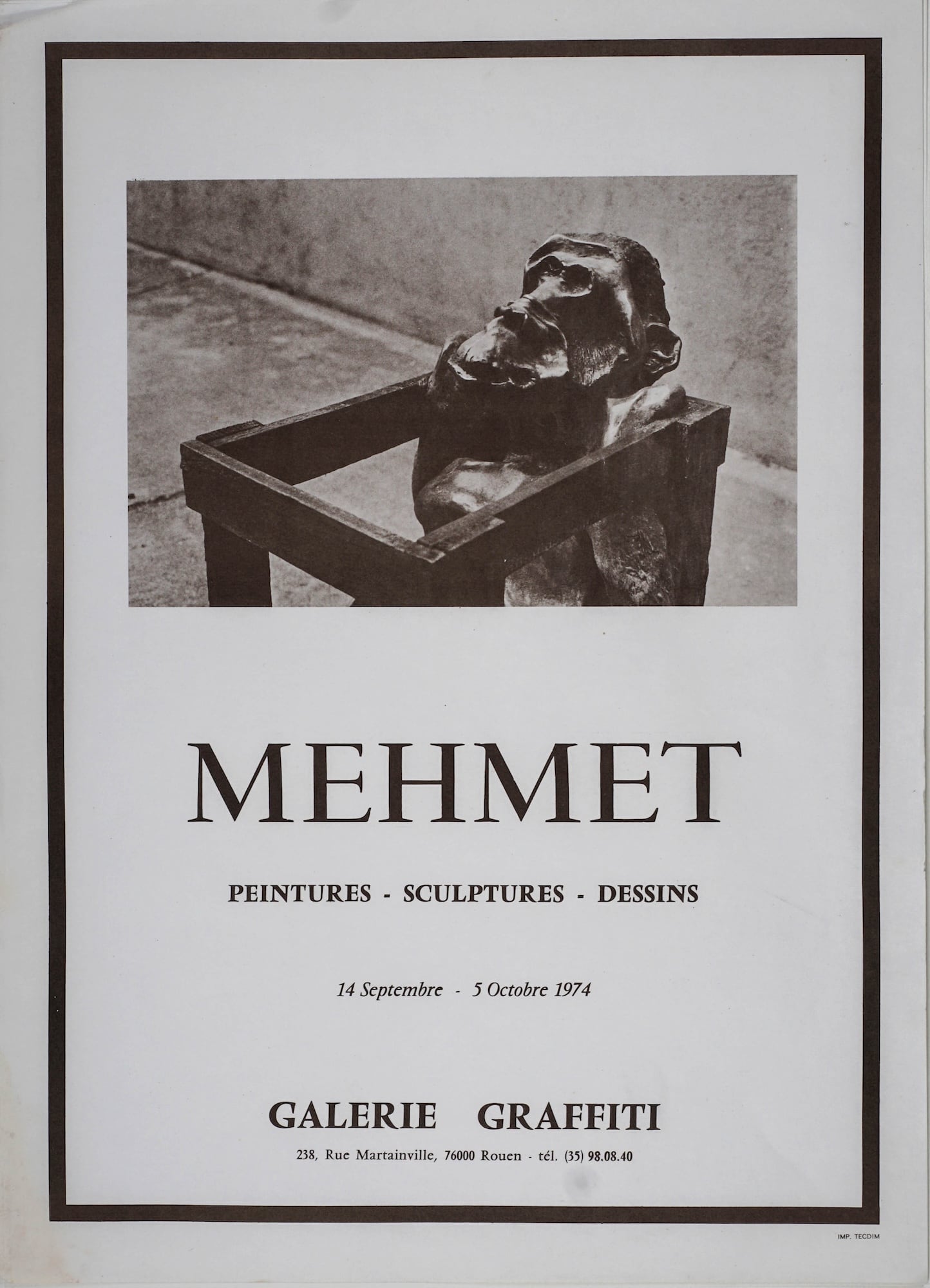
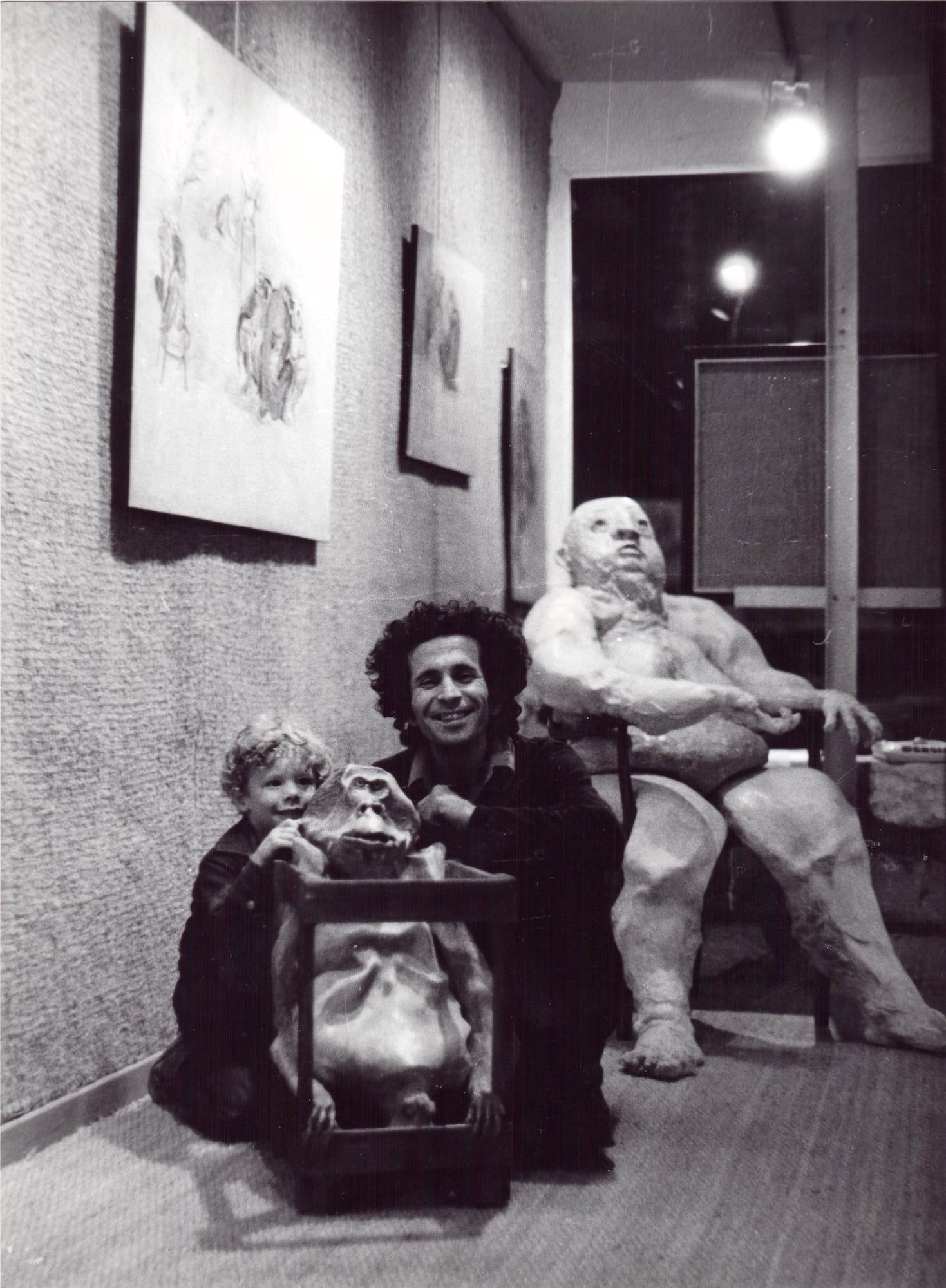
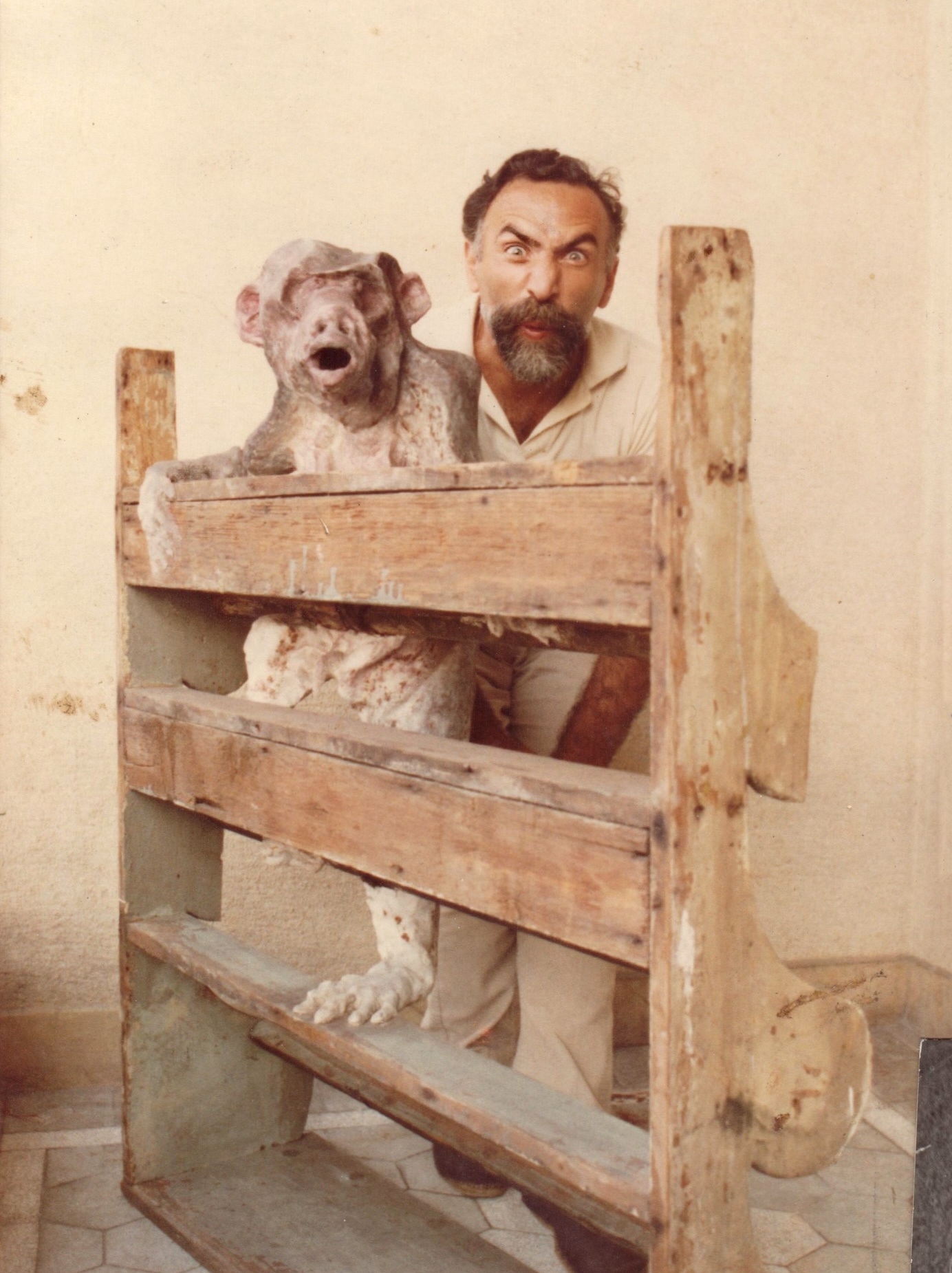
Thus, the plump old matrons of Istanbul, stuffed with dreams and sweets, the lecherous old men, the dark-eyed children, and the stale boudoir dogs have disappeared from the stage, giving way to the baboon: the baboon alone, in pairs, in groups, often meditative, frozen in that vertiginous instant of stillness that bridges instinct and thought, beast and man, authenticity and mask, and—more subtly—the being we are, and the social, responsible, lucid, happy human being, more or less in harmony with others and the world, that we might be.
Mehmet’s baboons, in the end, we hardly know whether it is we who are looking at them, or they who are looking at us. The fact that they evolve in an open world, apparently without bars; that they use, like us, the familiar furniture of the “vertical animal”; and the strange mutations they undergo from one canvas to another—all this opens multiple avenues for reflection and speculation.
Yet this is not primarily a philosophical or metaphysical painting: it is, one dares say, a painter’s painting. The artist’s delight in letting washes flow, thinning paint to the bare canvas, and working with a restrained yet rich palette (ochres, browns, greens, pinks) is evident—even when touched with humor, tenderness, or, on the contrary, sharp irony.
At the 1971 exhibition, we spoke of an art of observation. Something of that remains, even as Mehmet simplifies his compositions, reduces his palette, and moves toward a form approaching caricature or allegory.
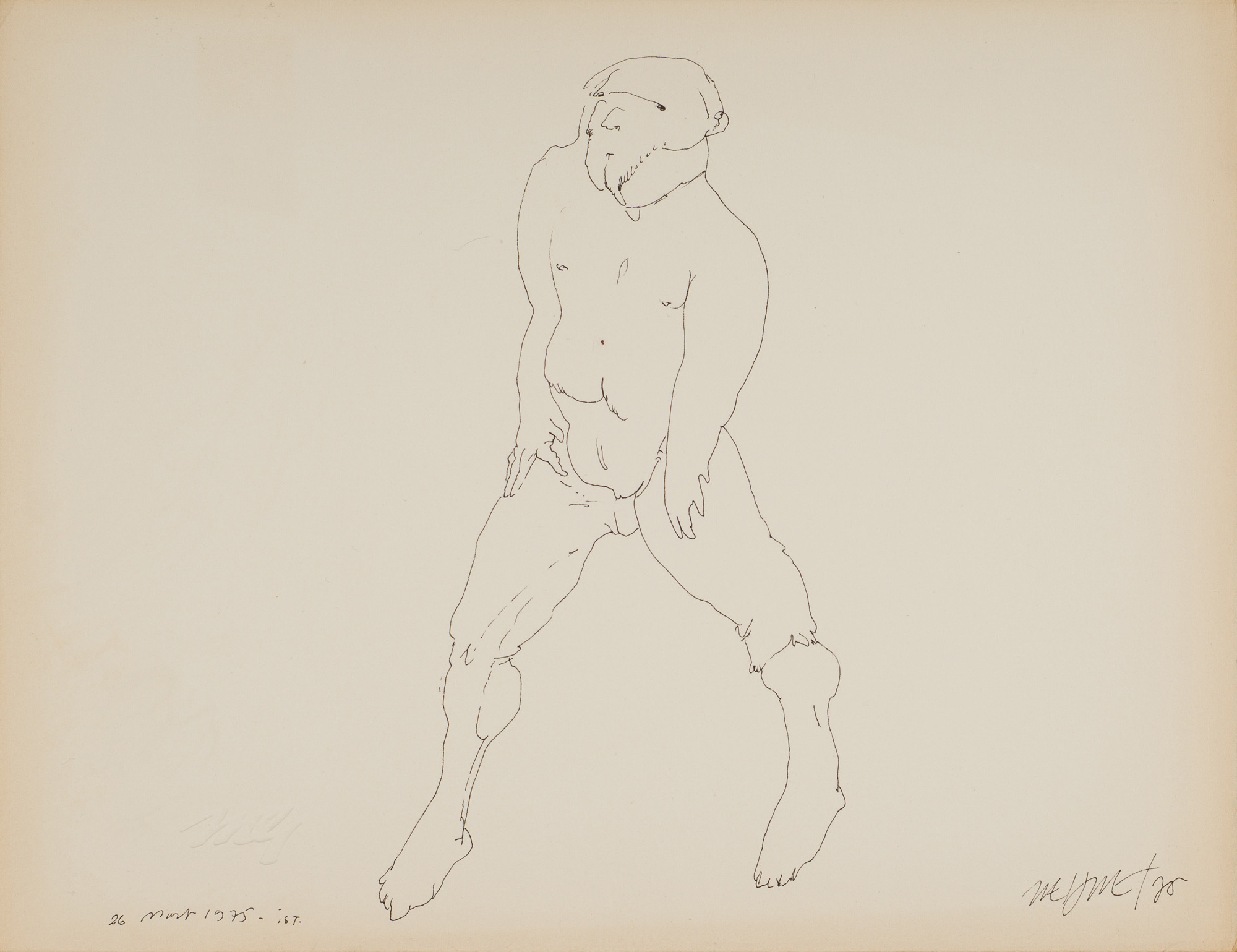
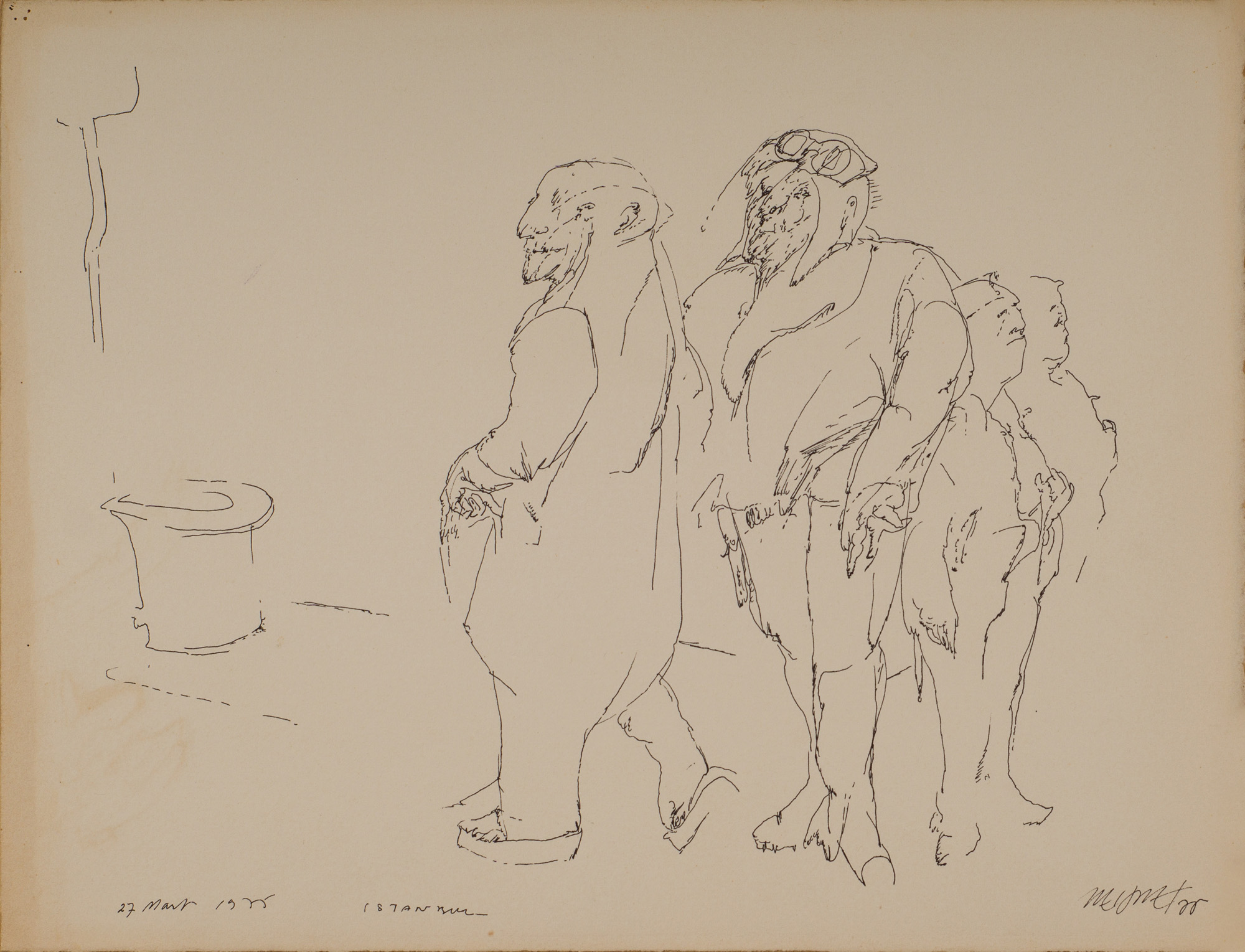
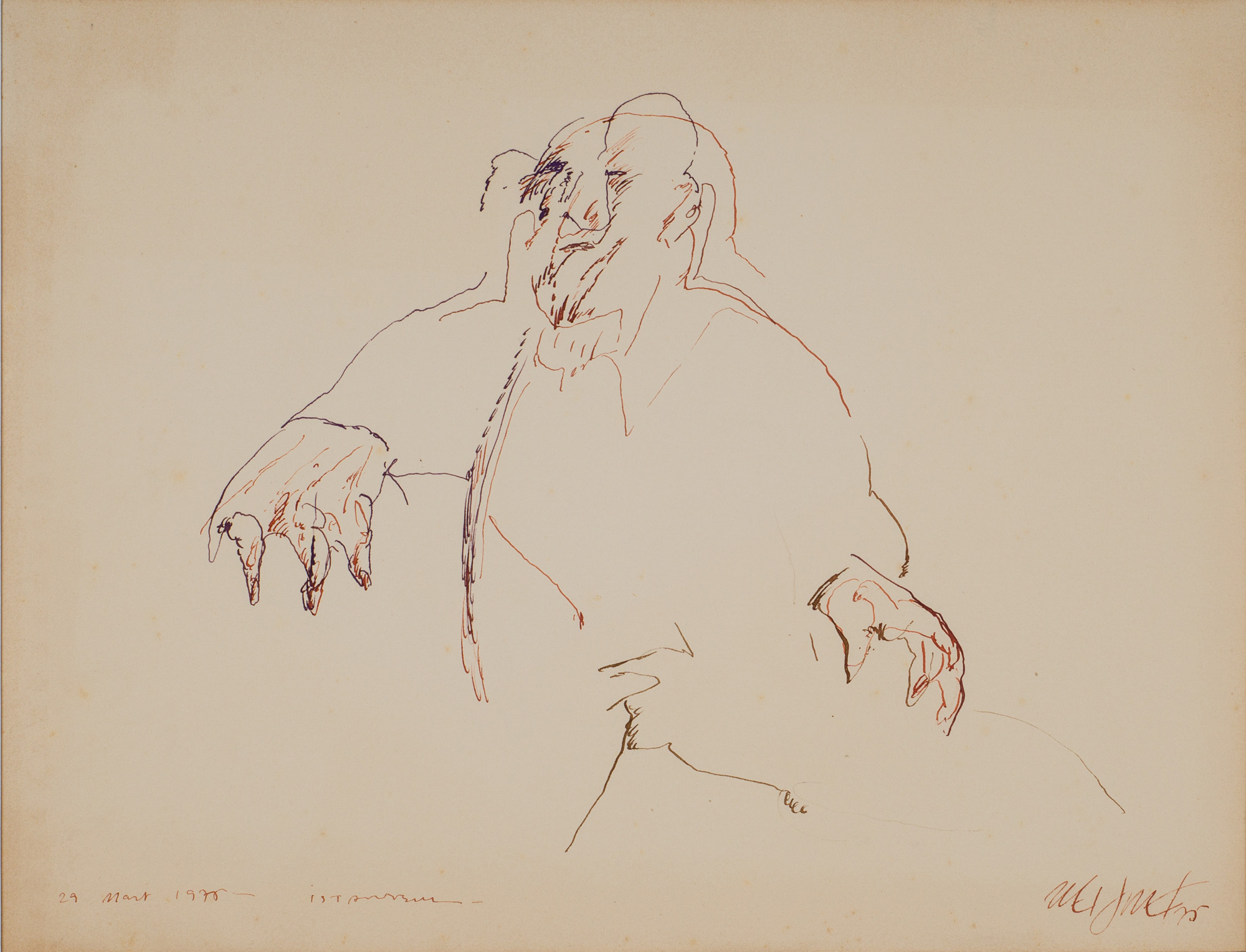
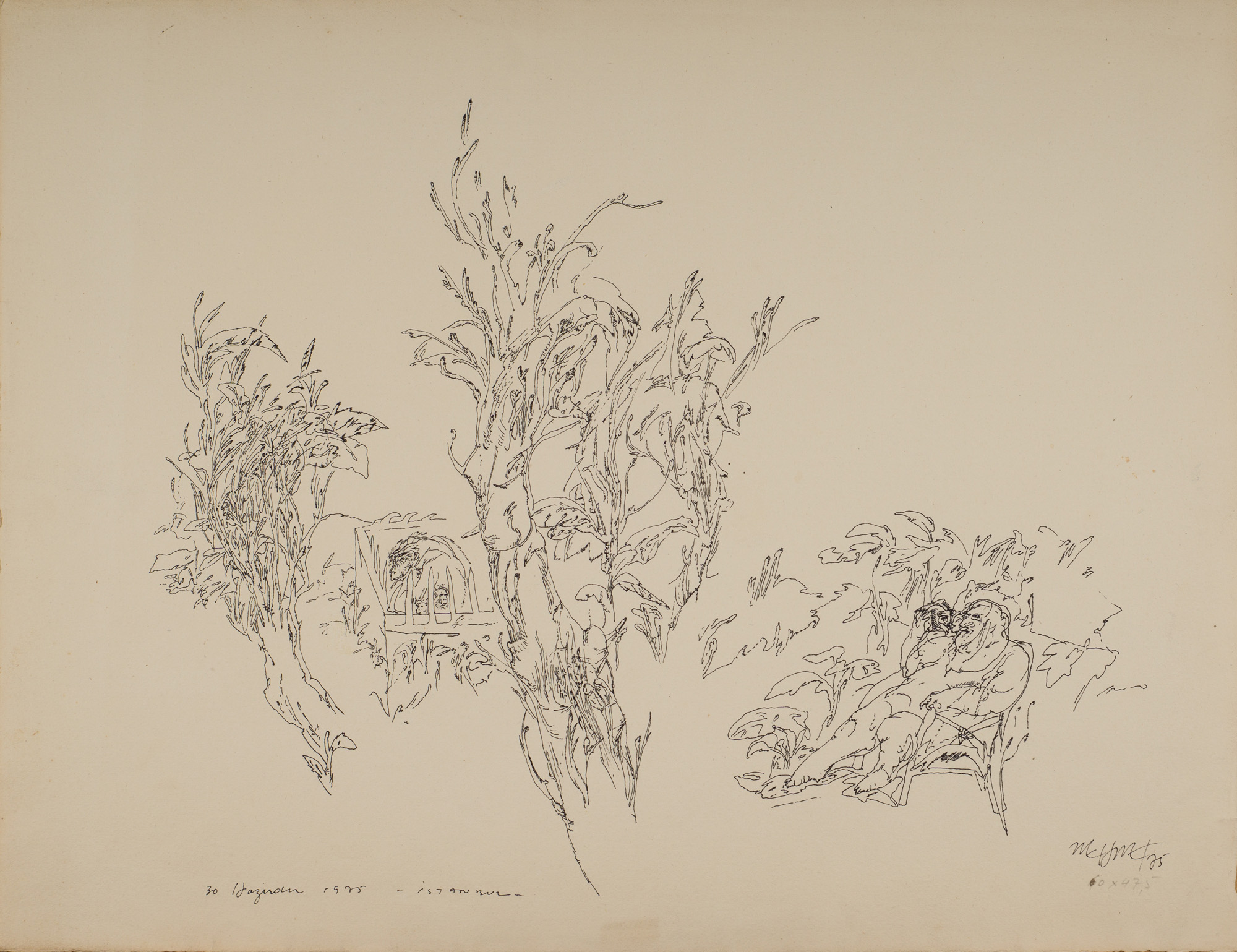
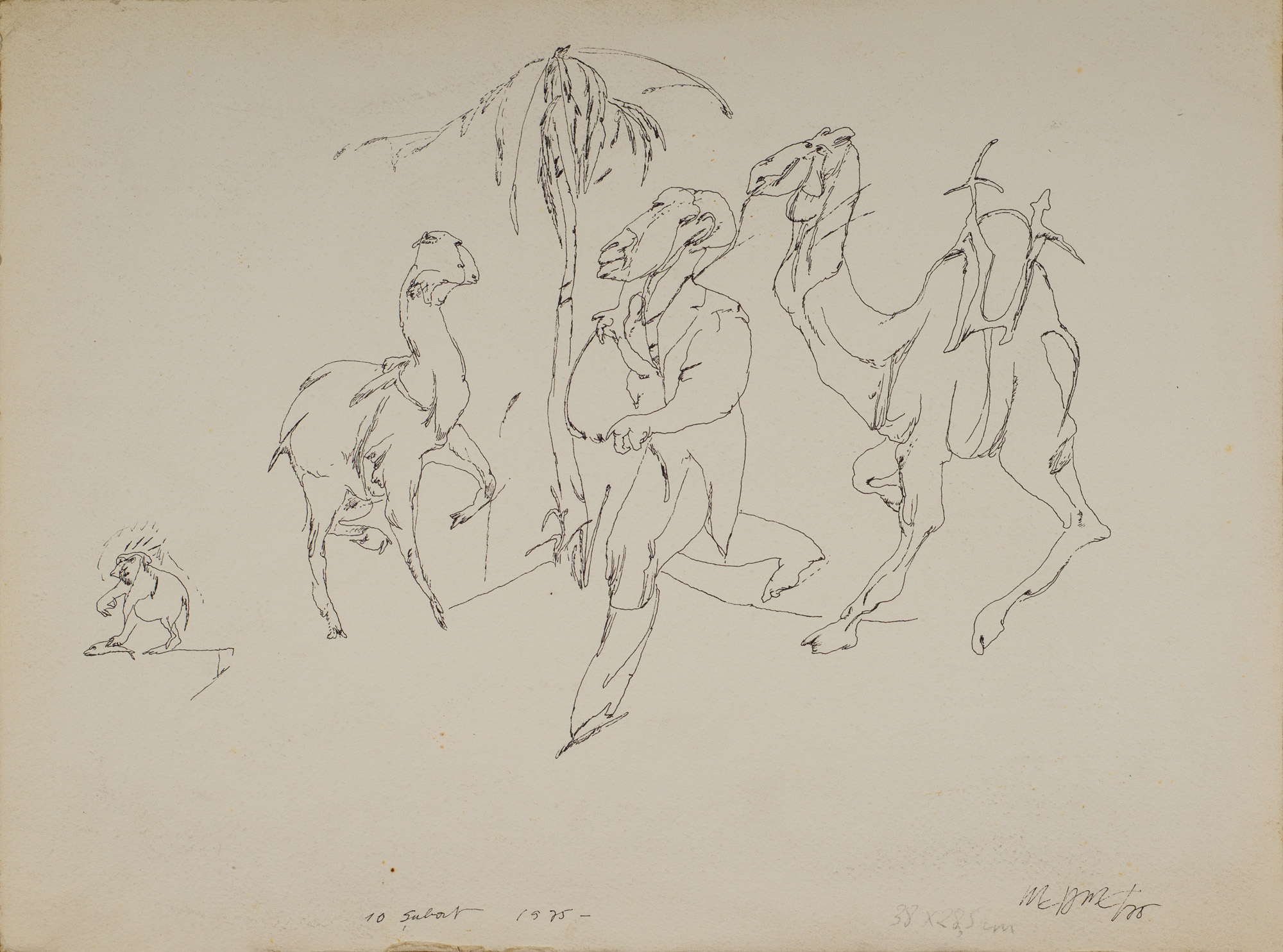
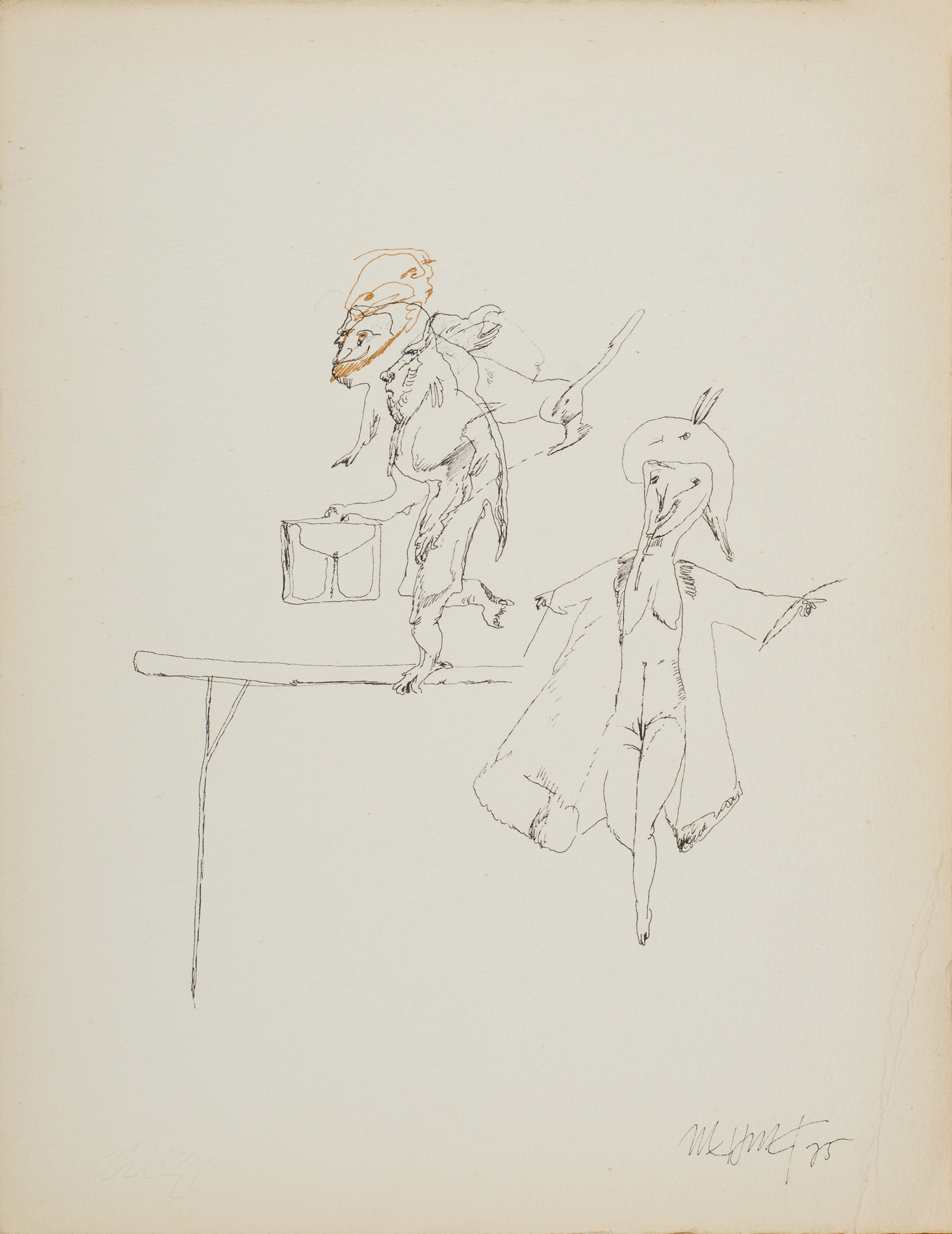
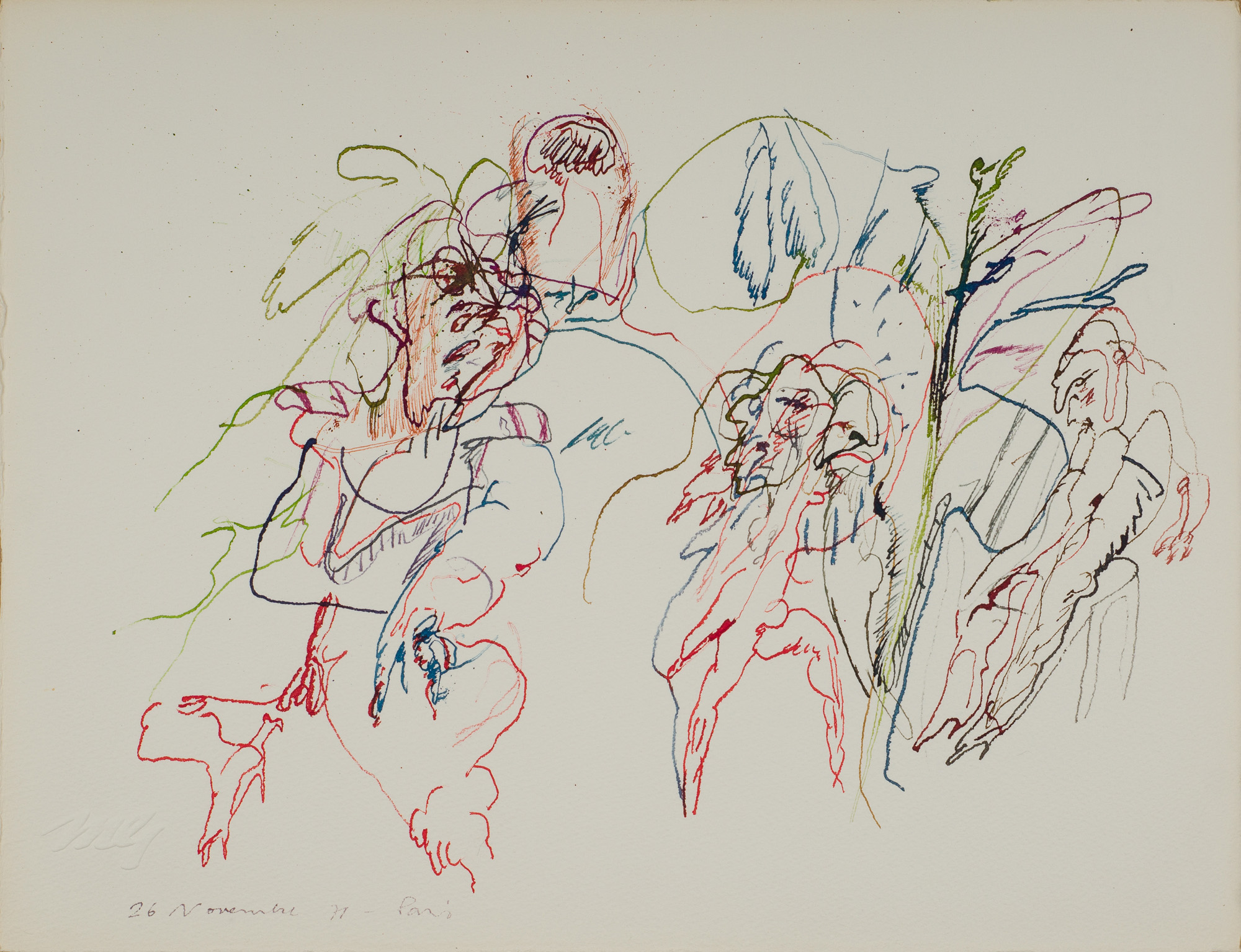
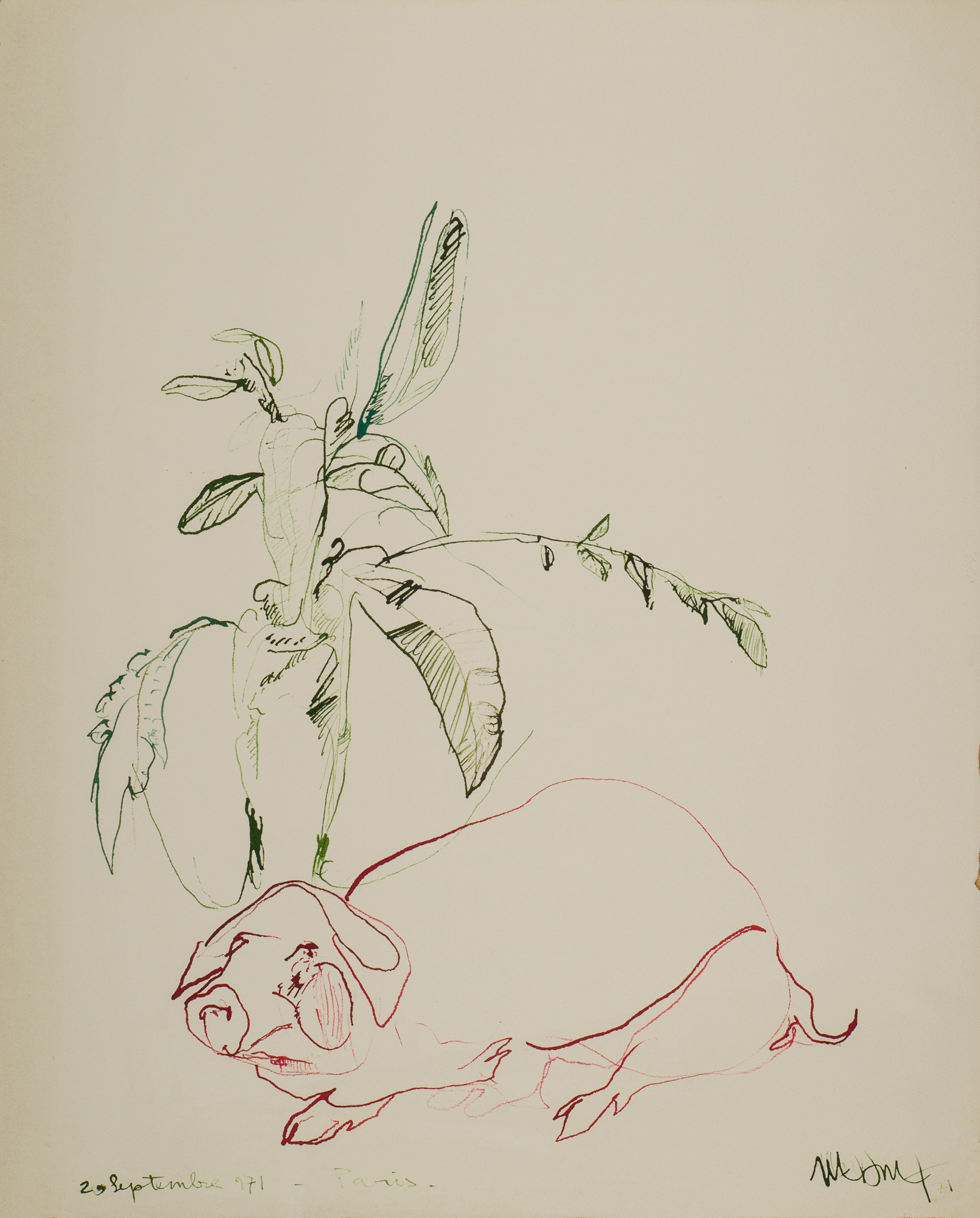
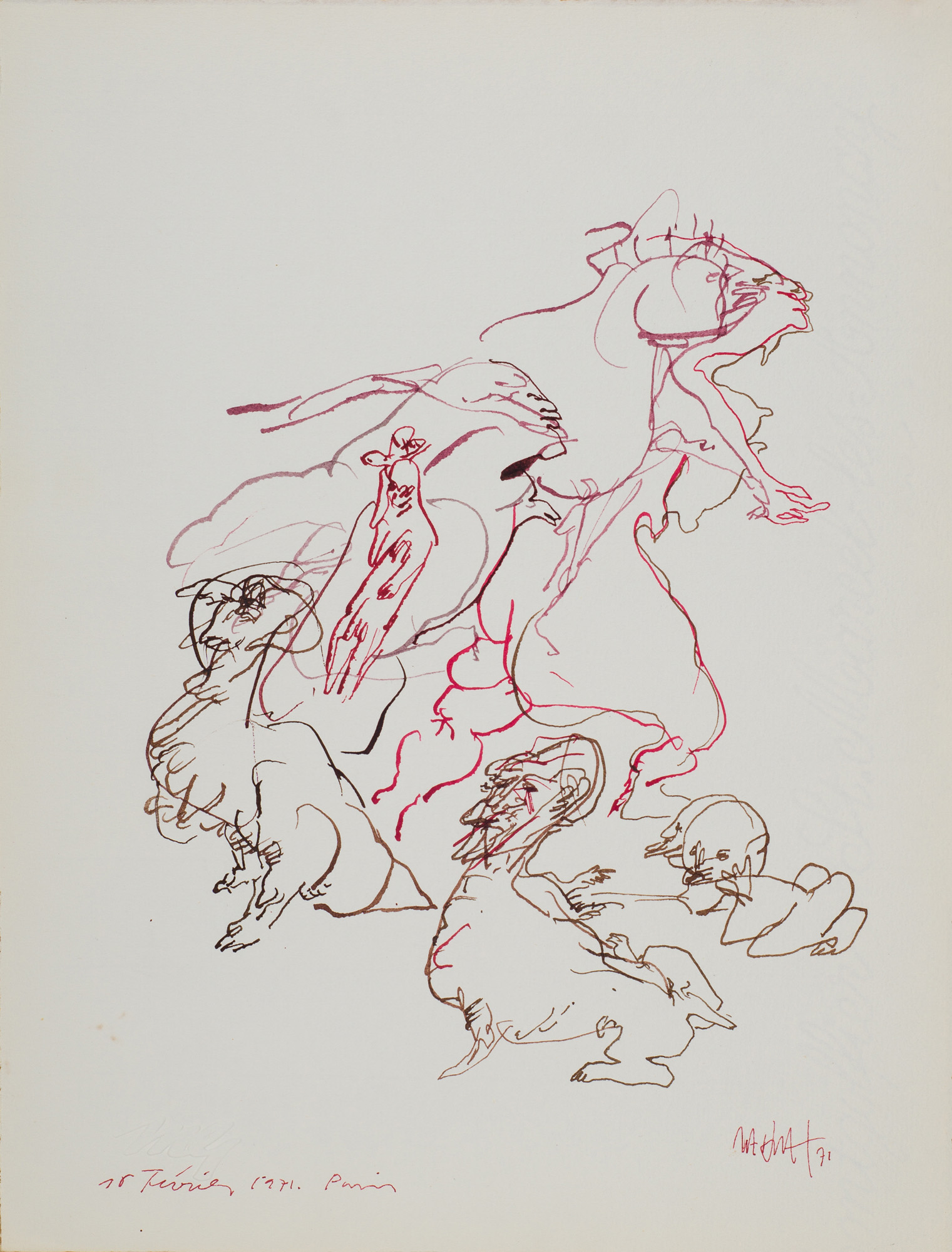
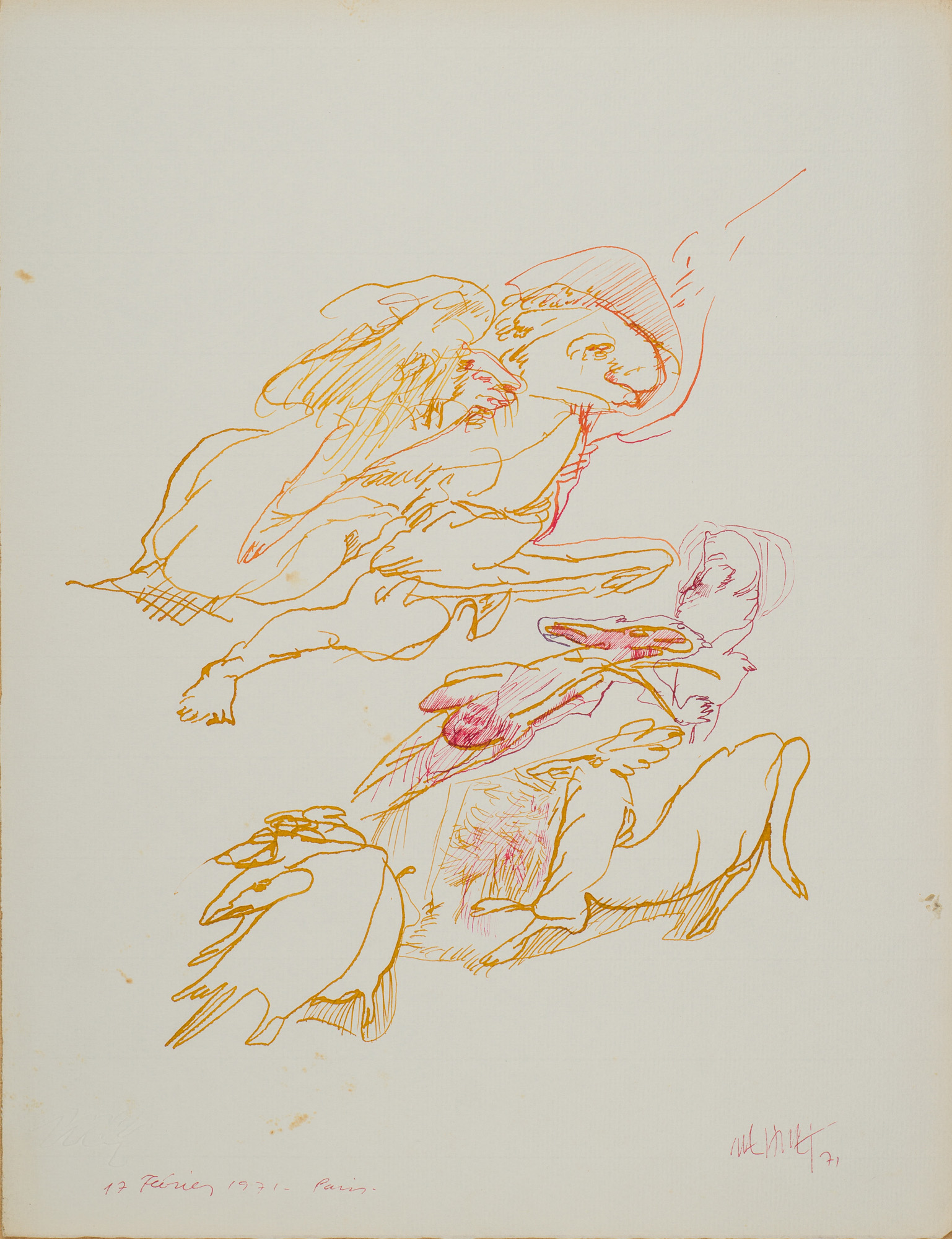
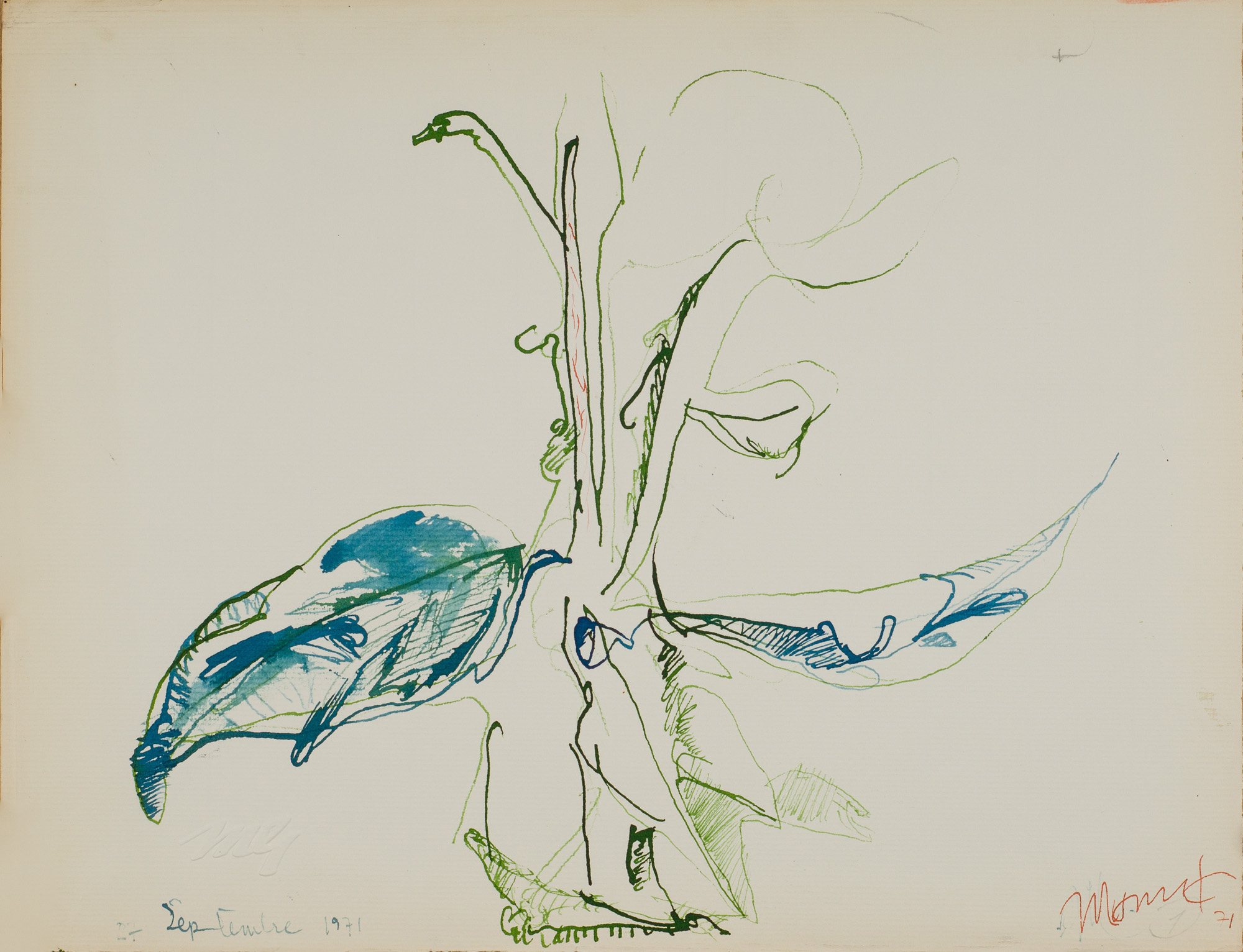
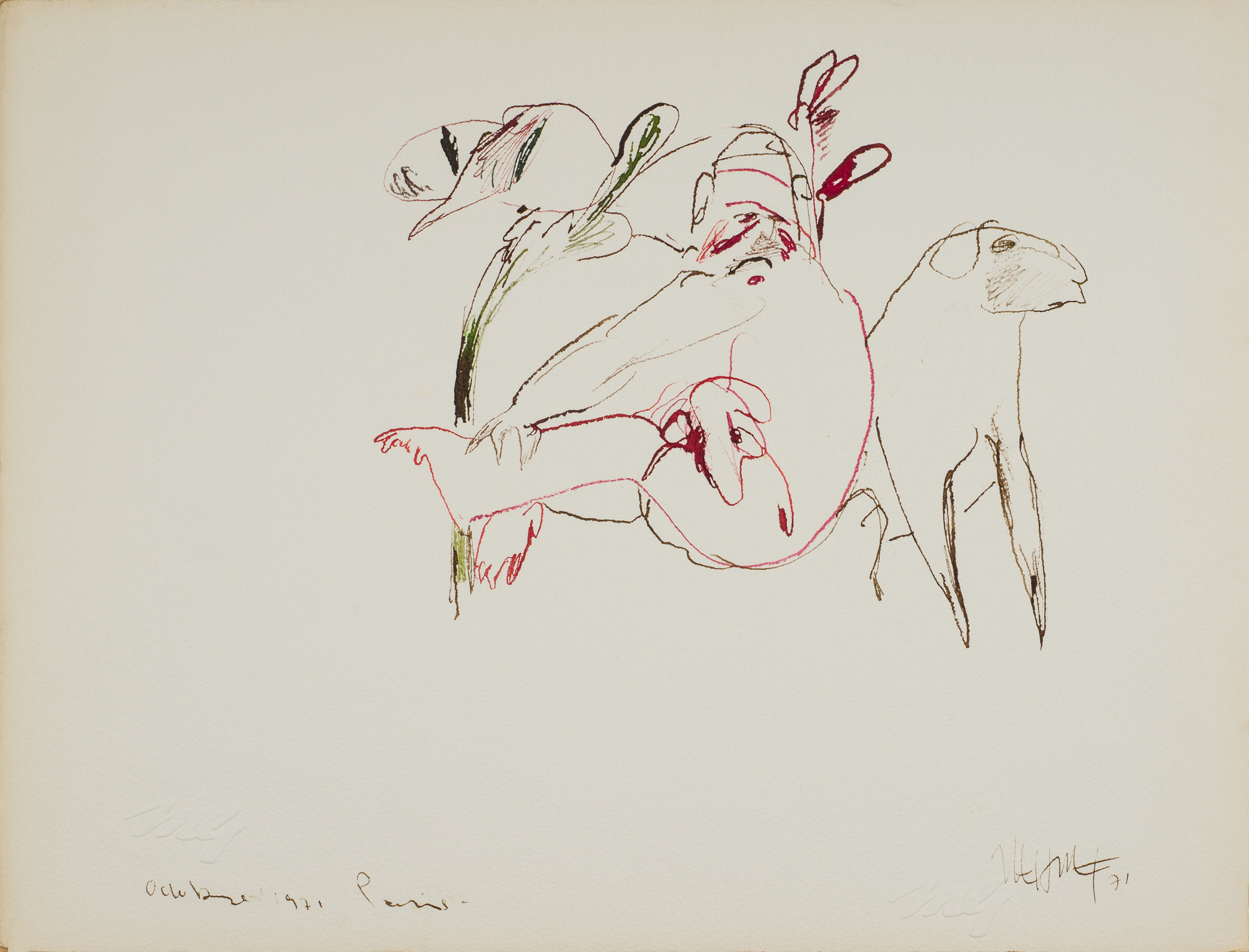
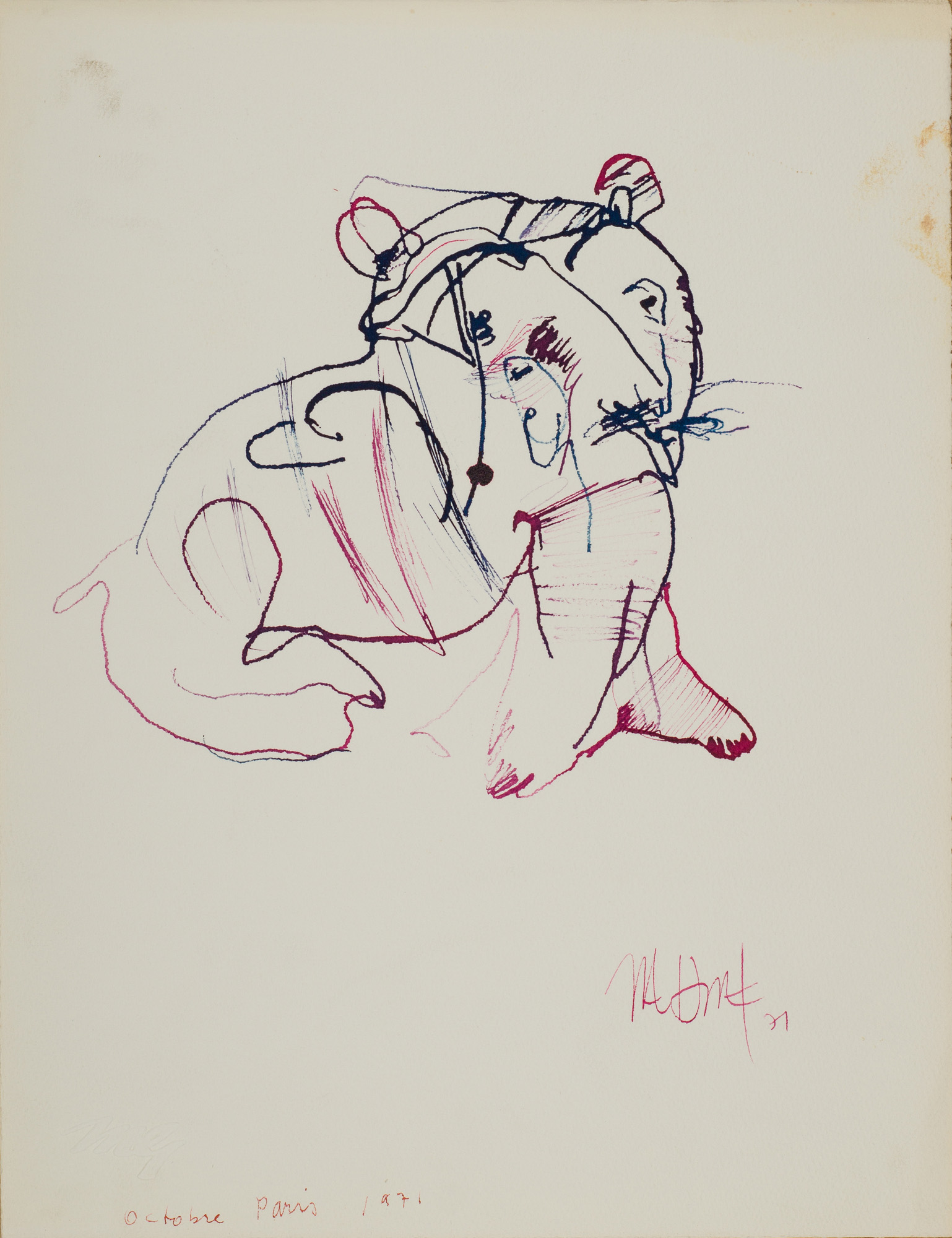
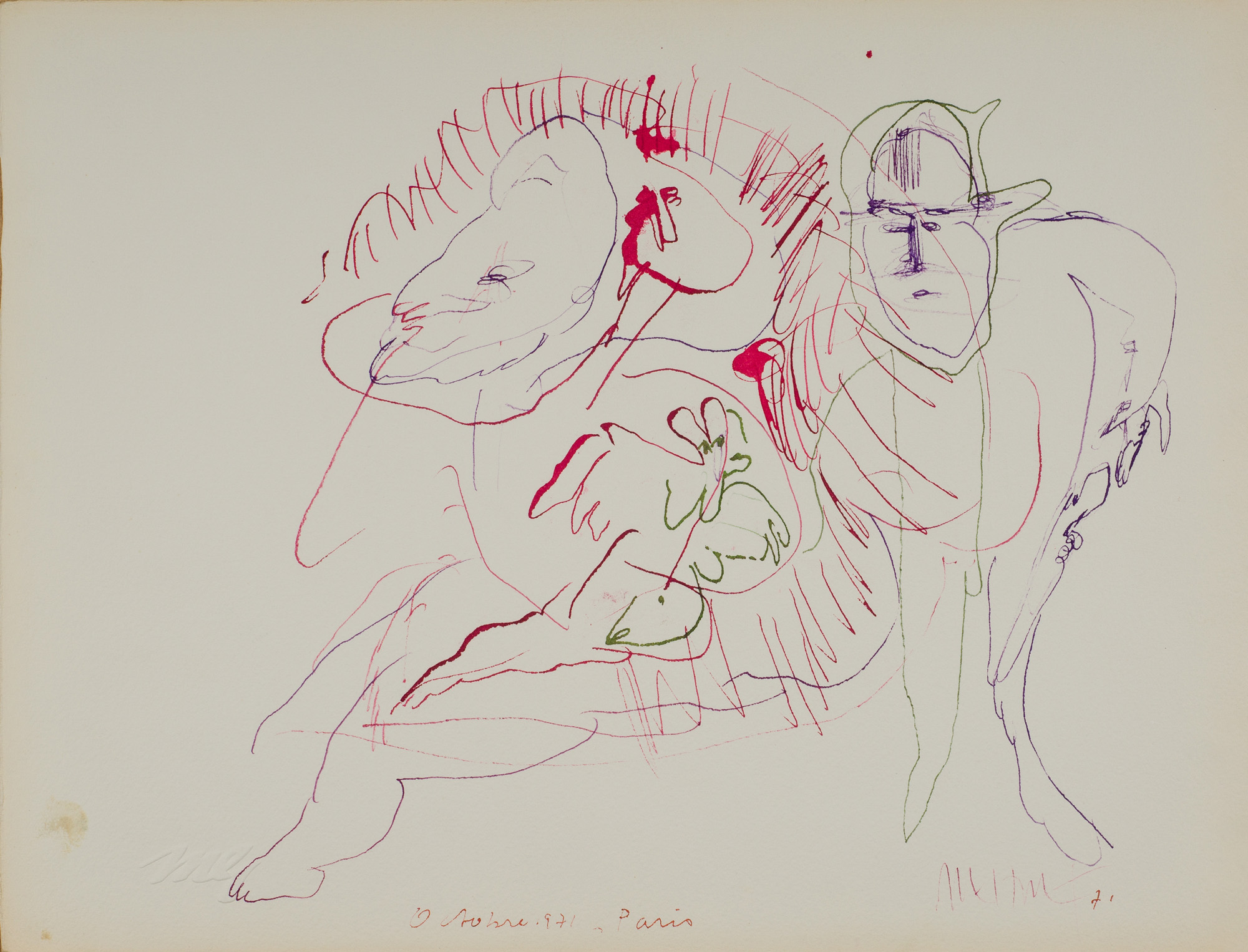
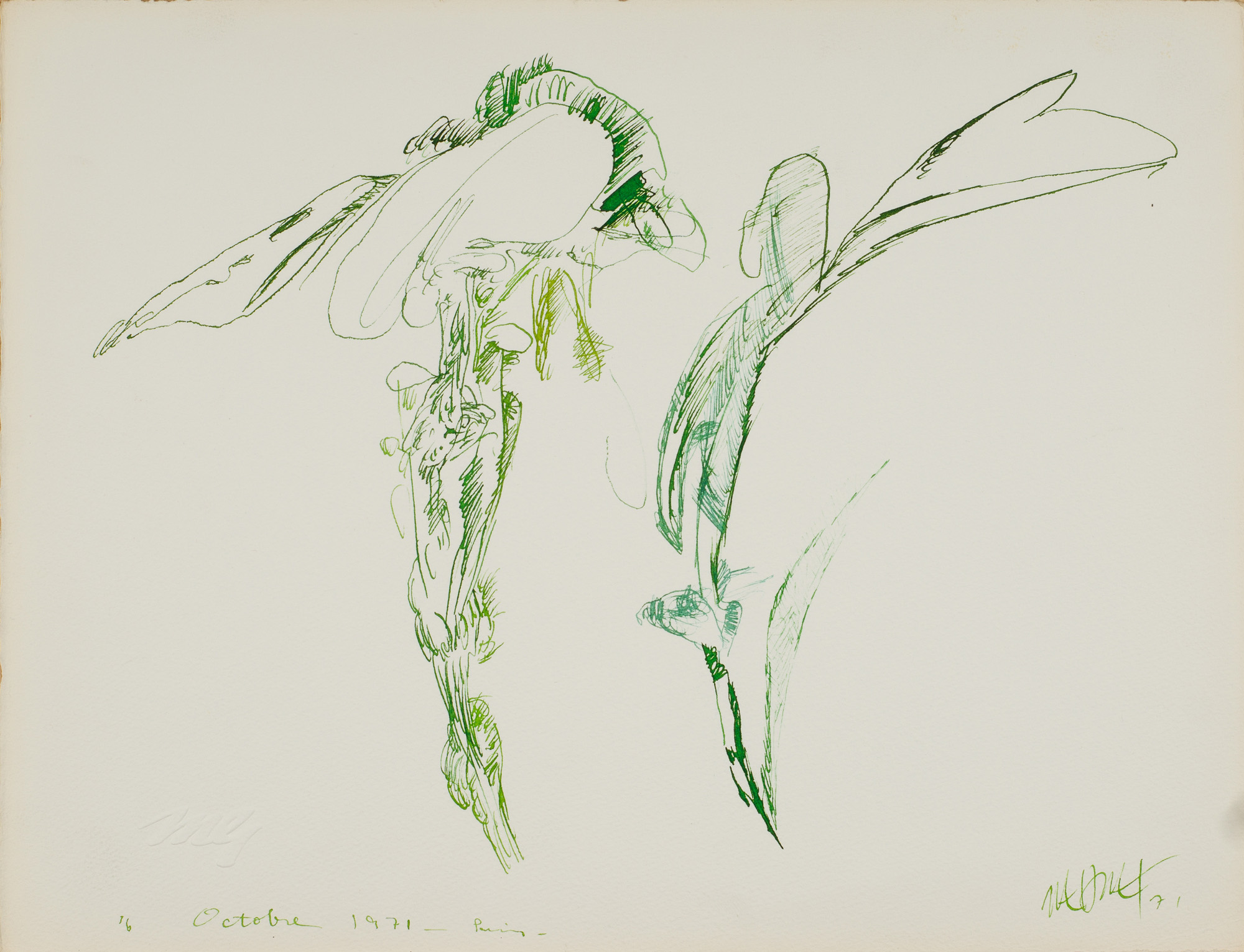
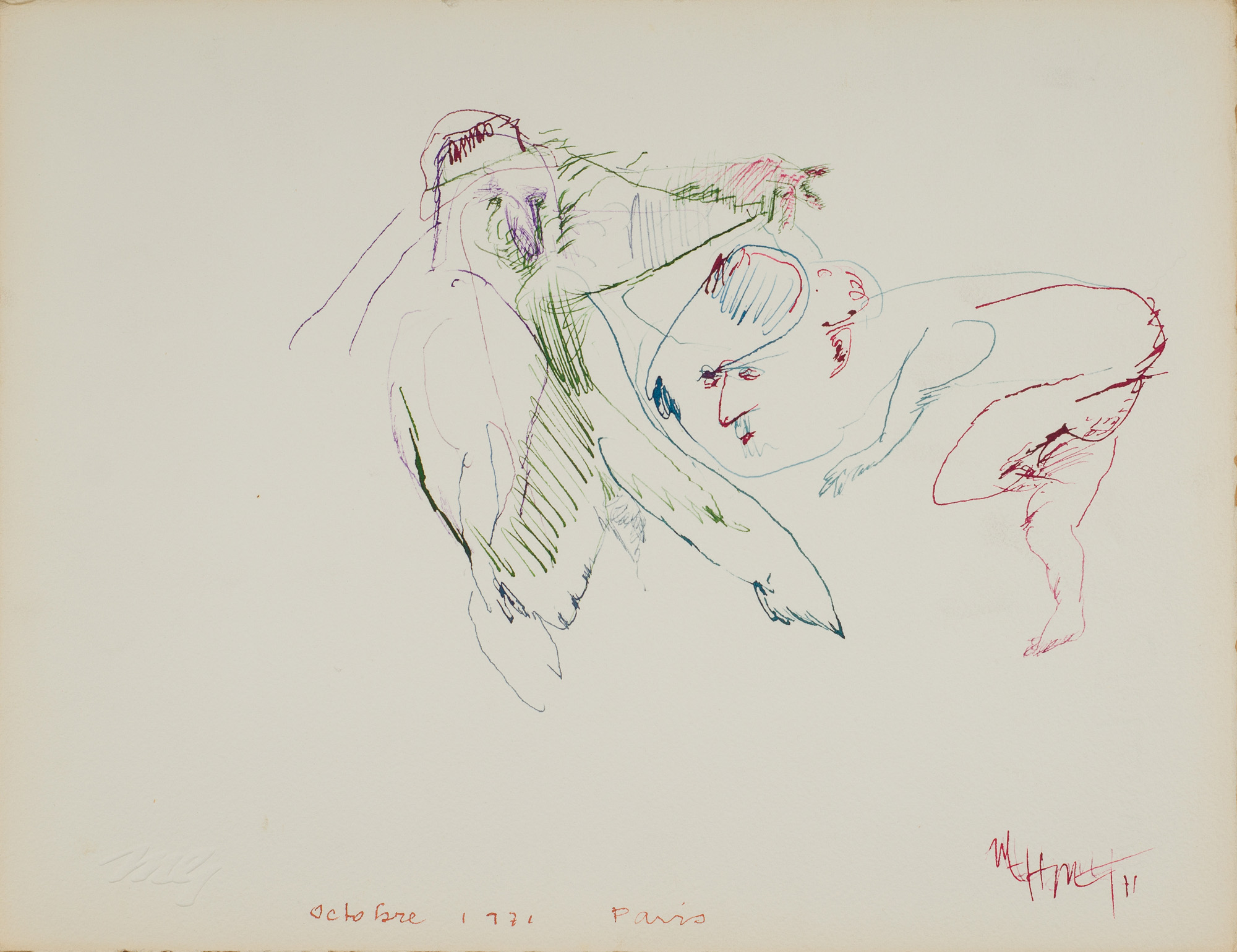
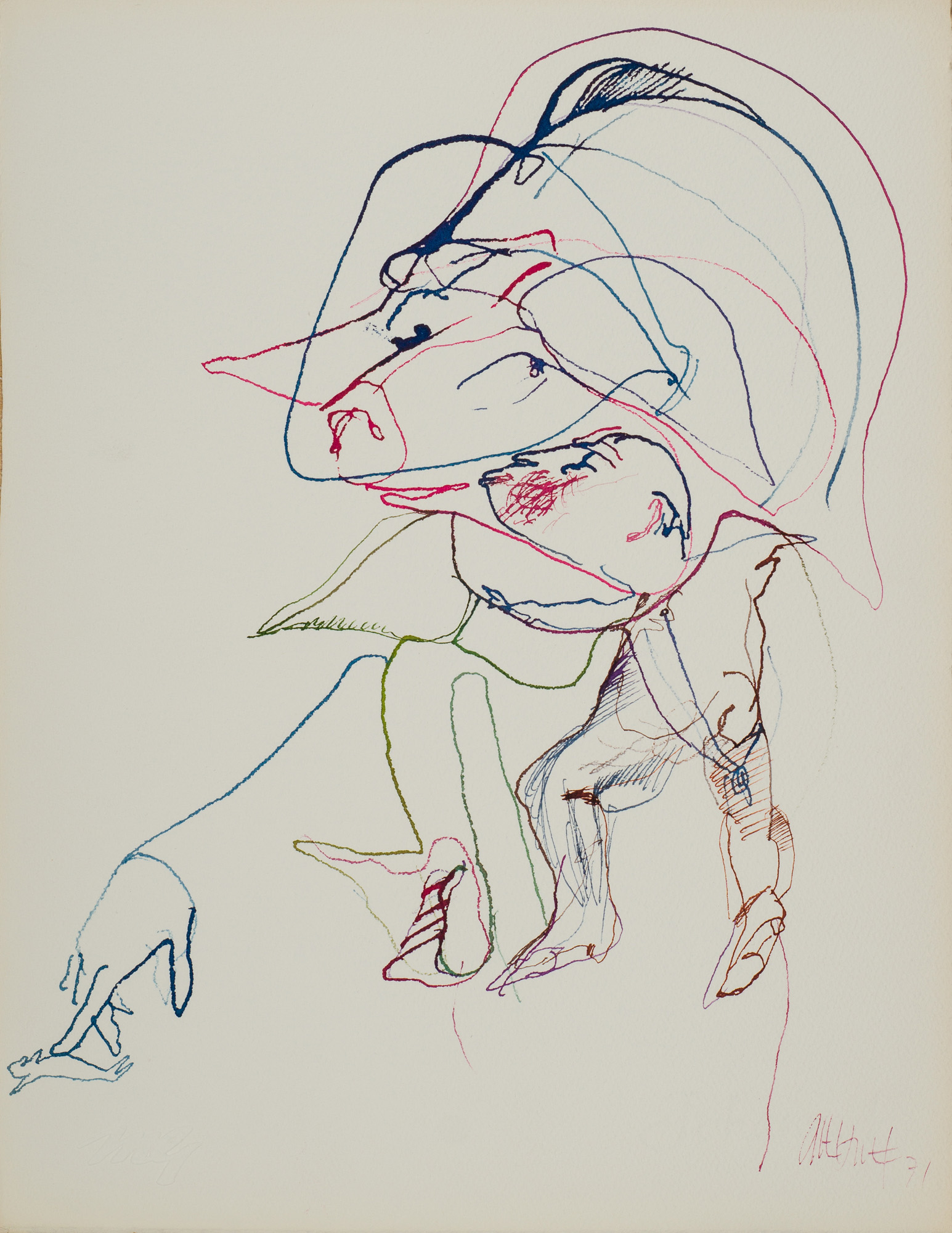
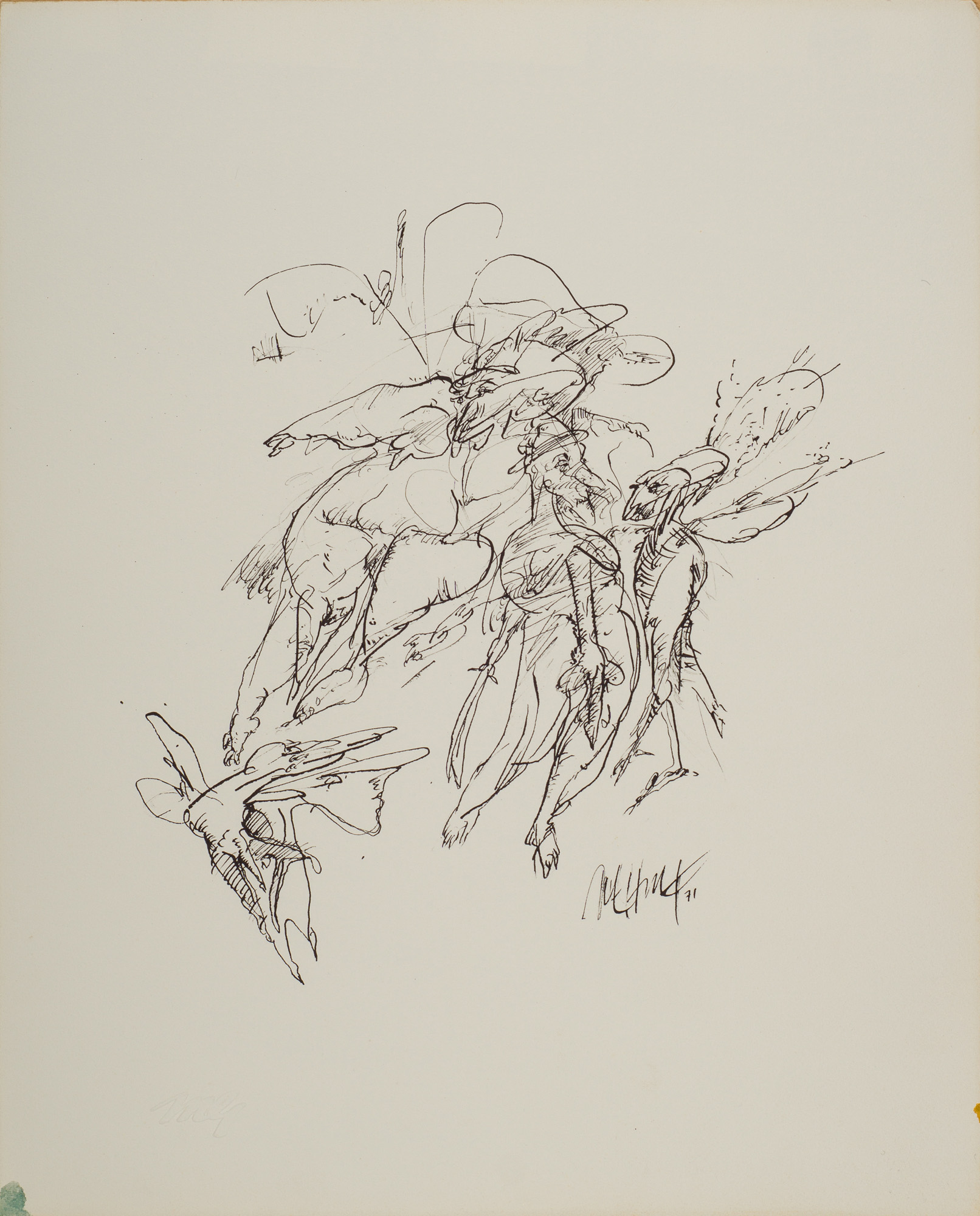
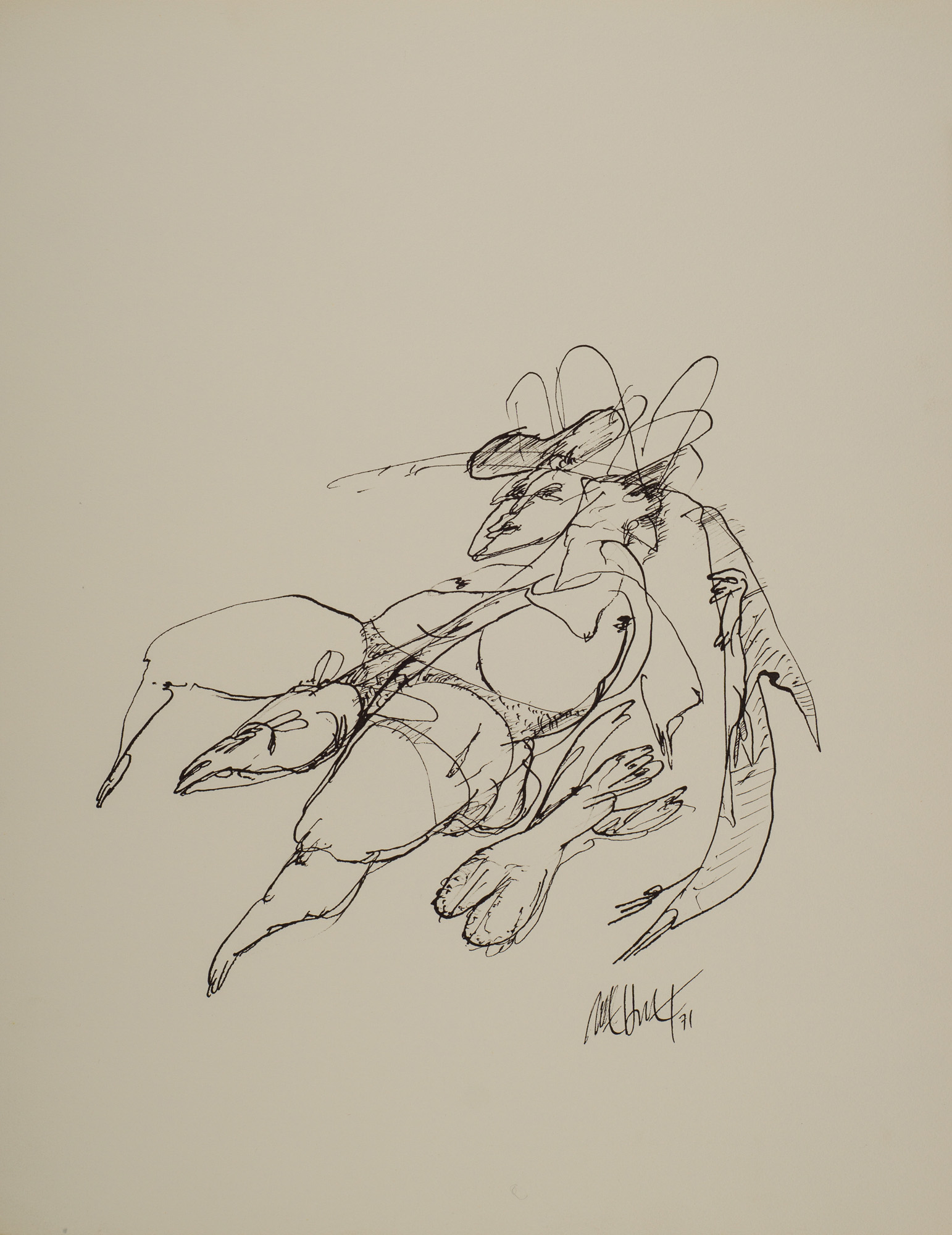
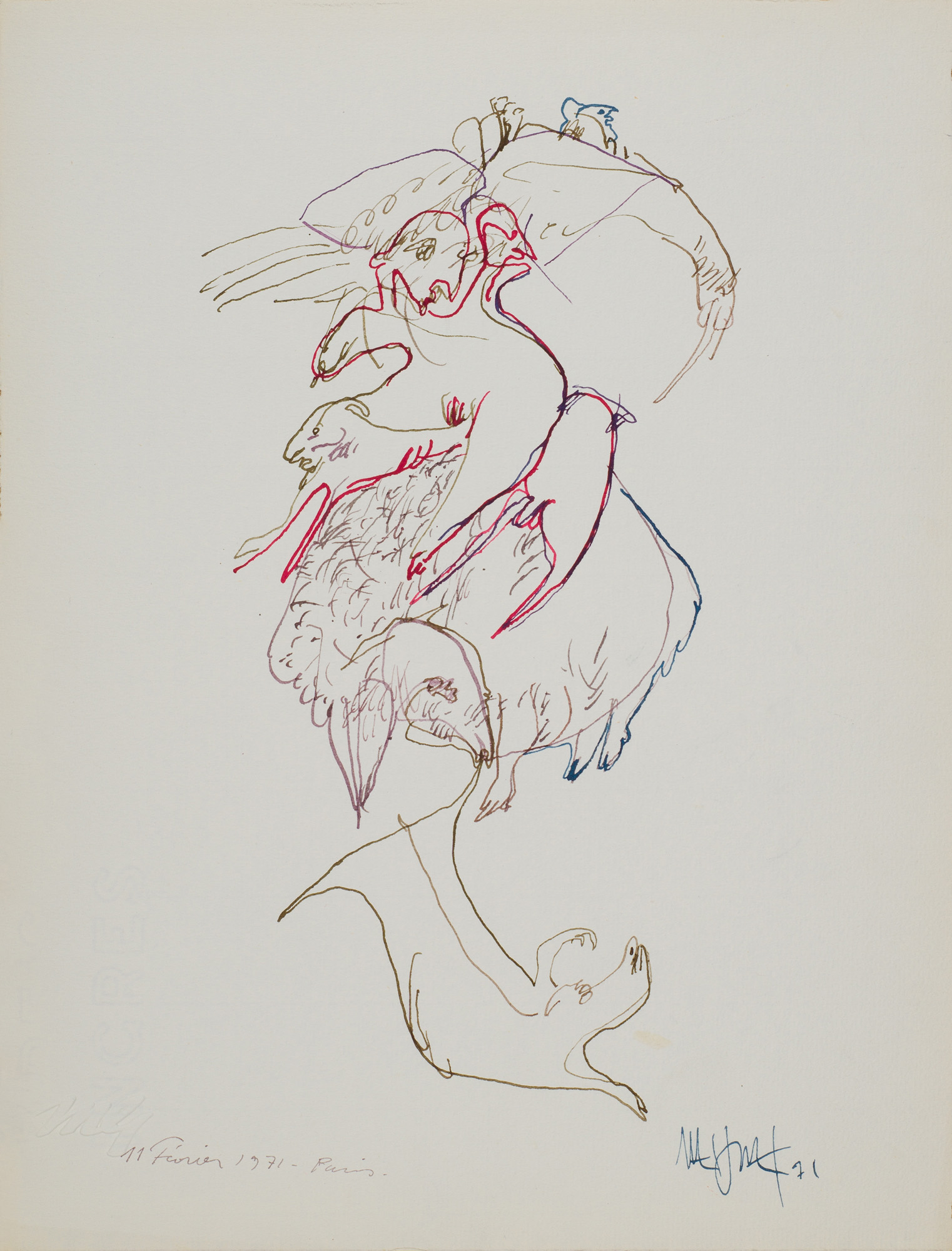
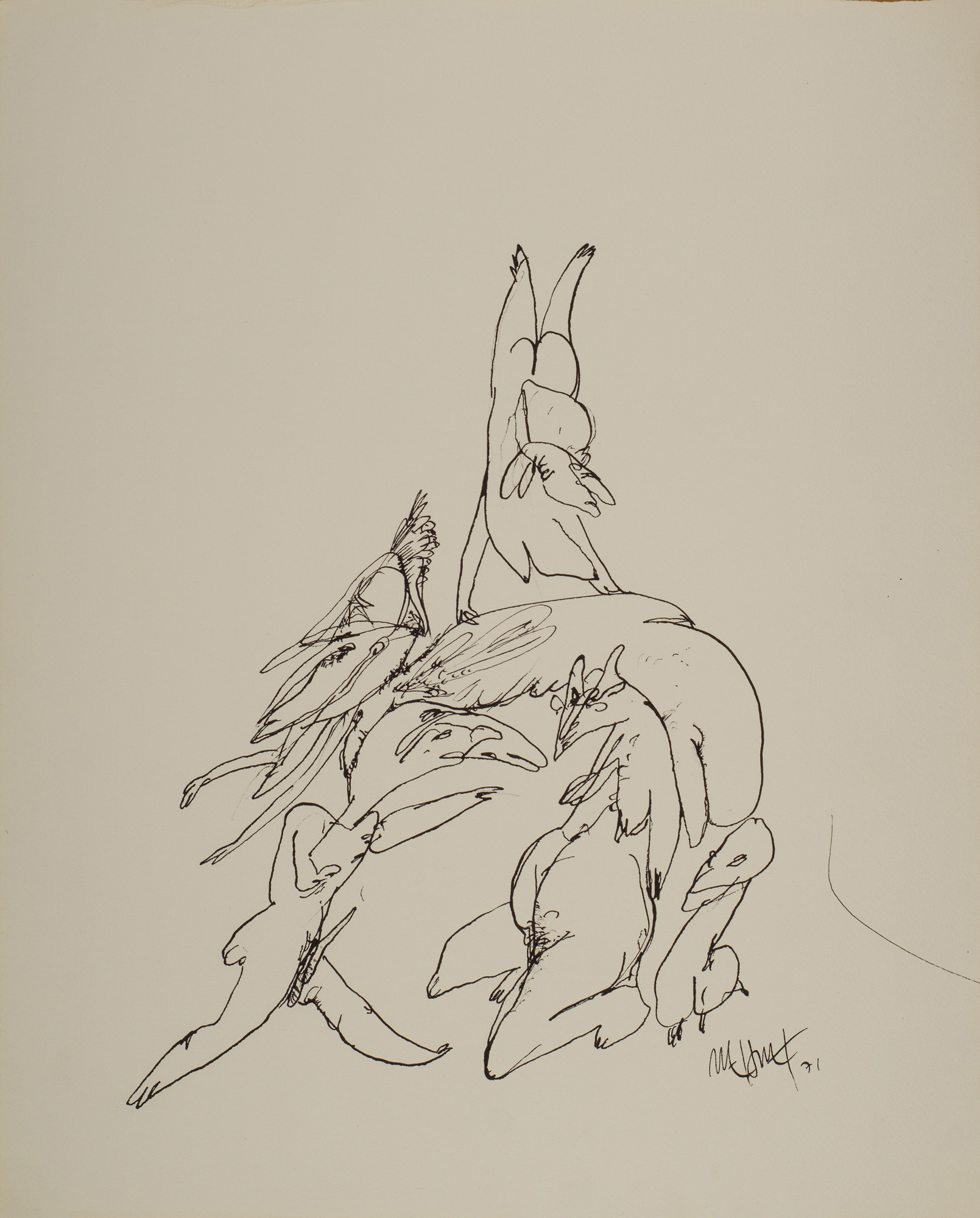
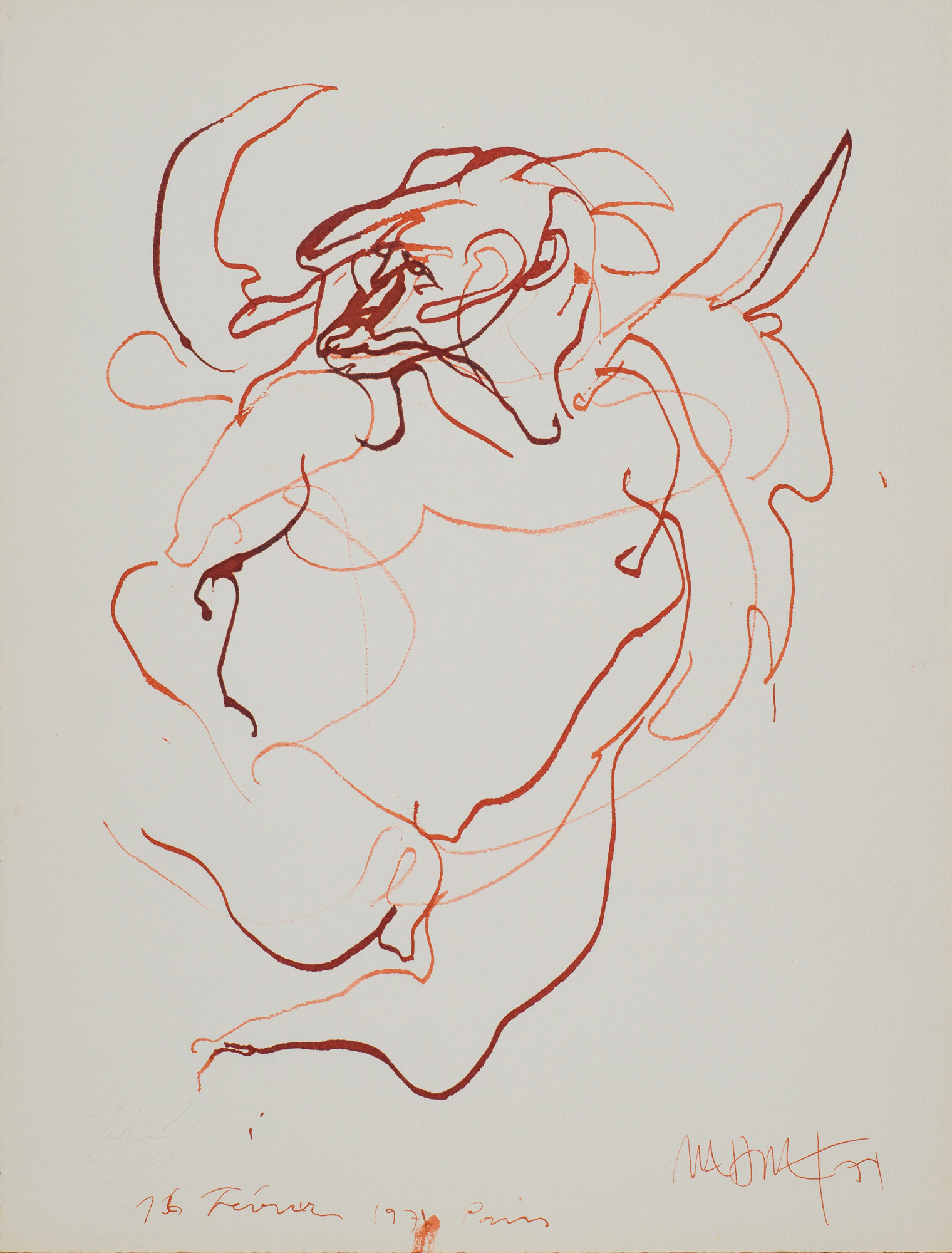
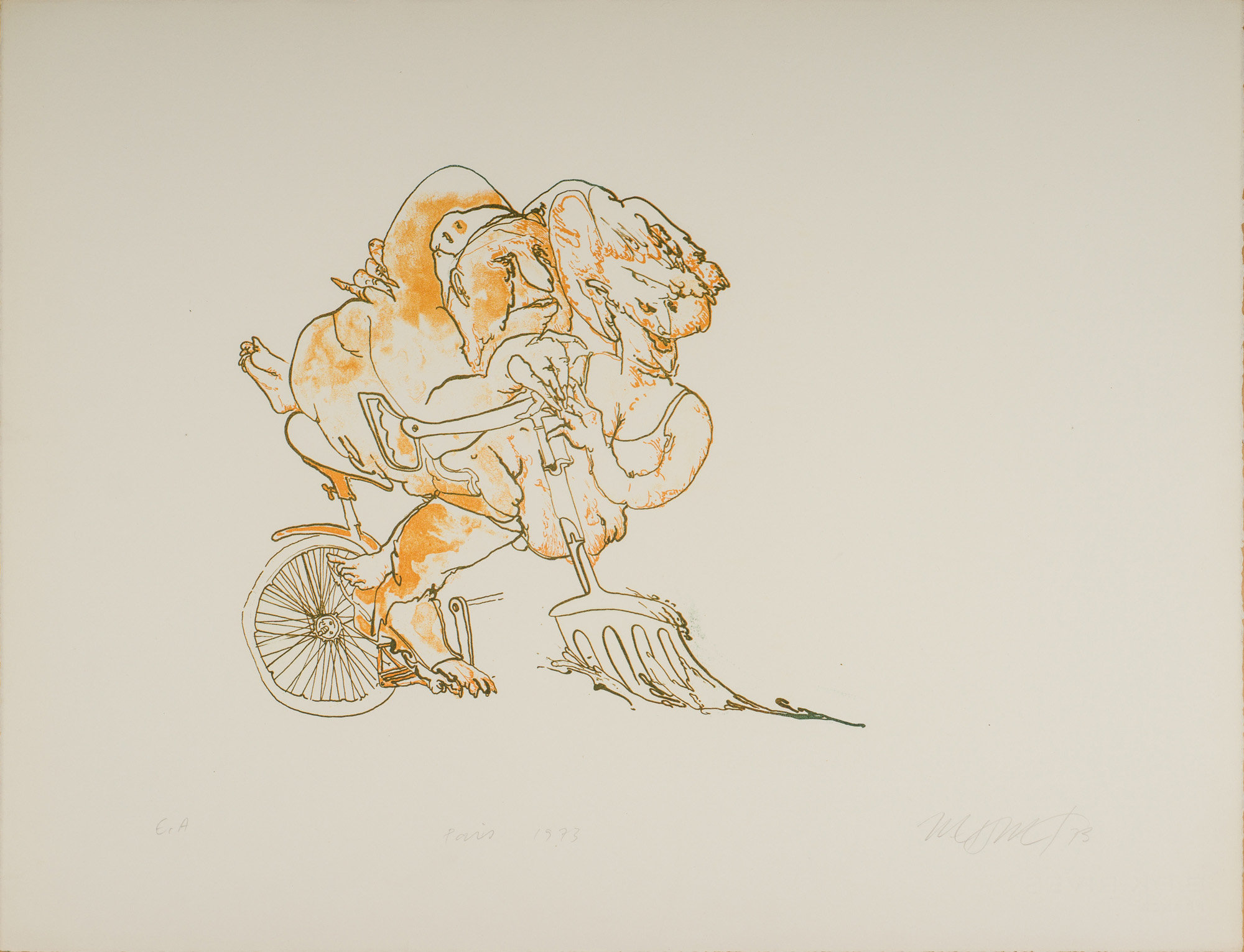
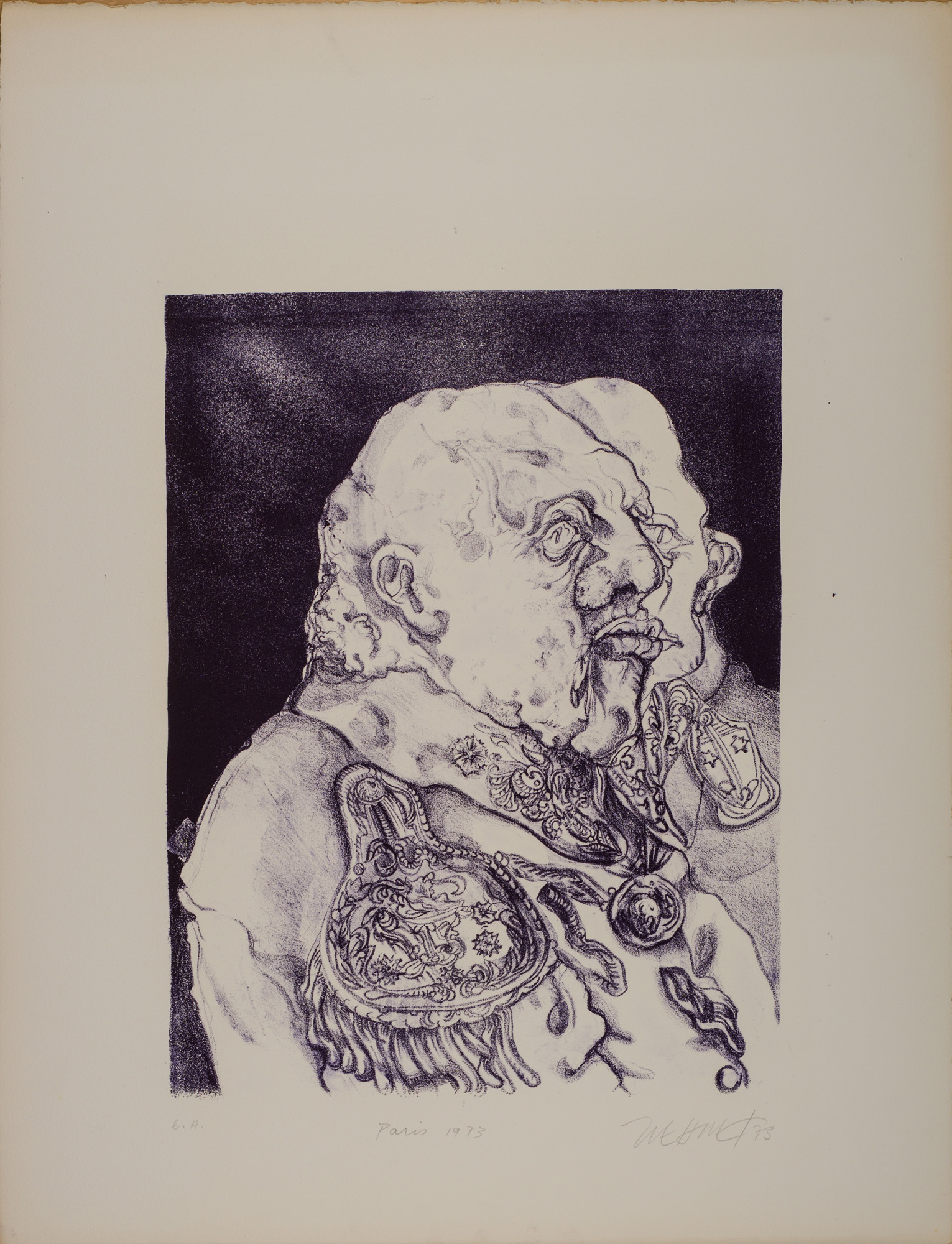
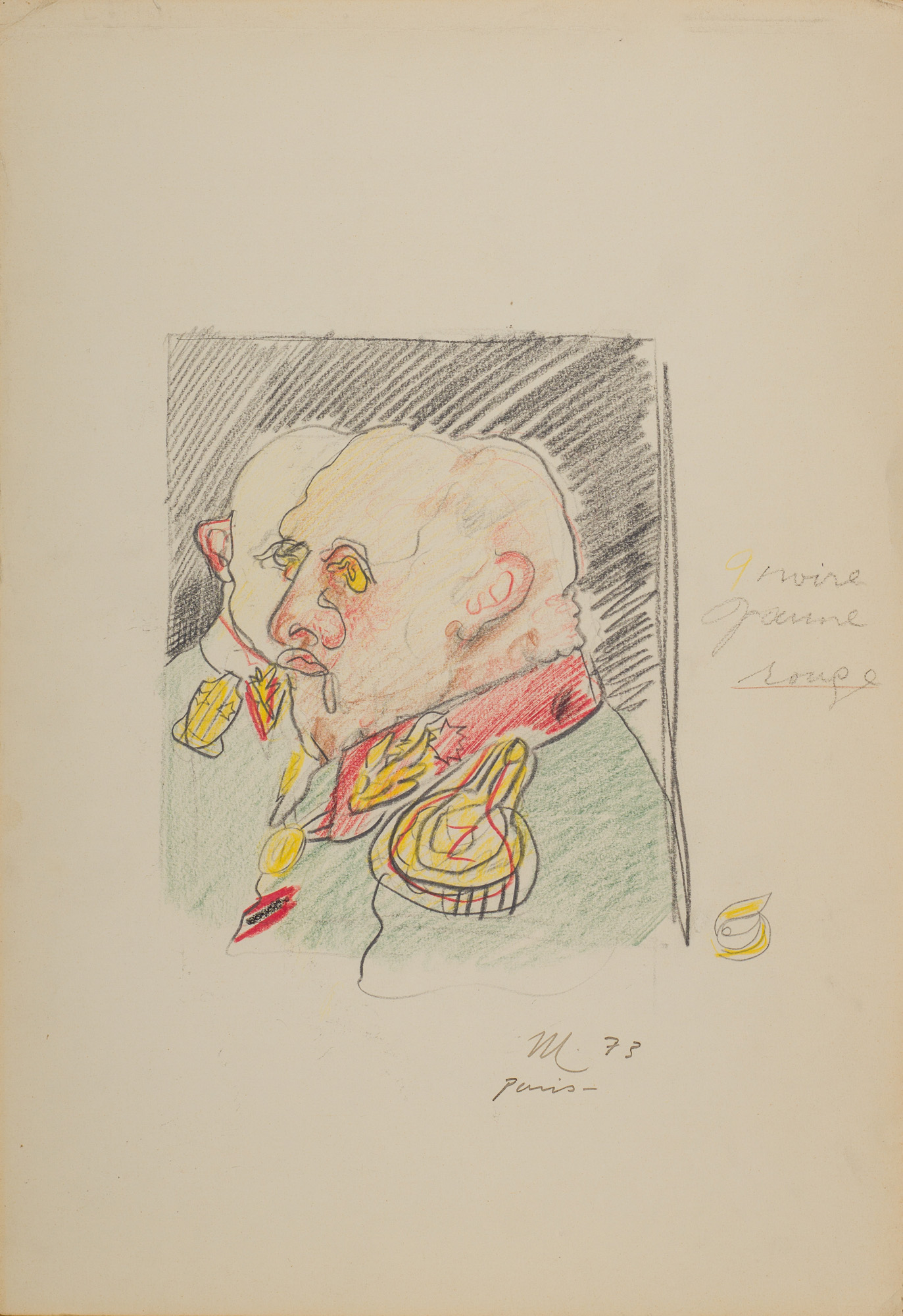
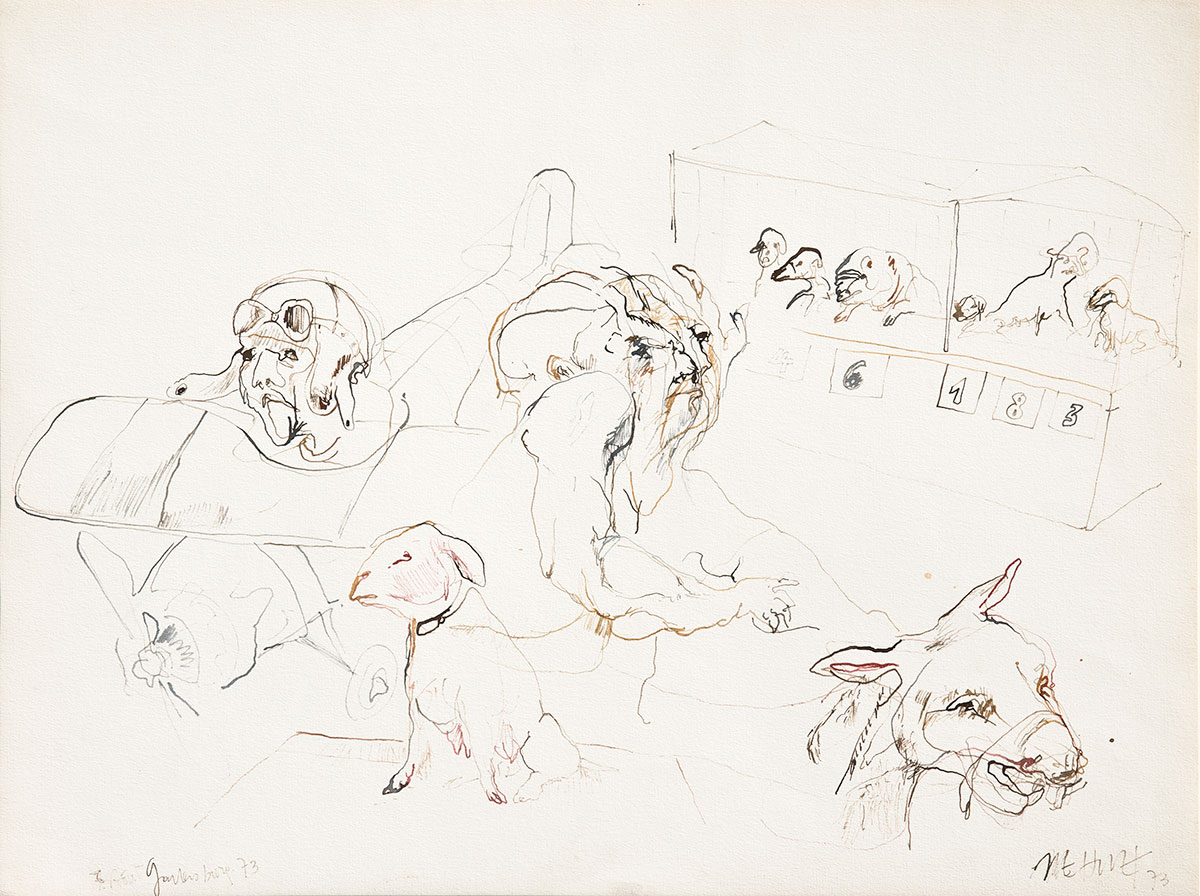
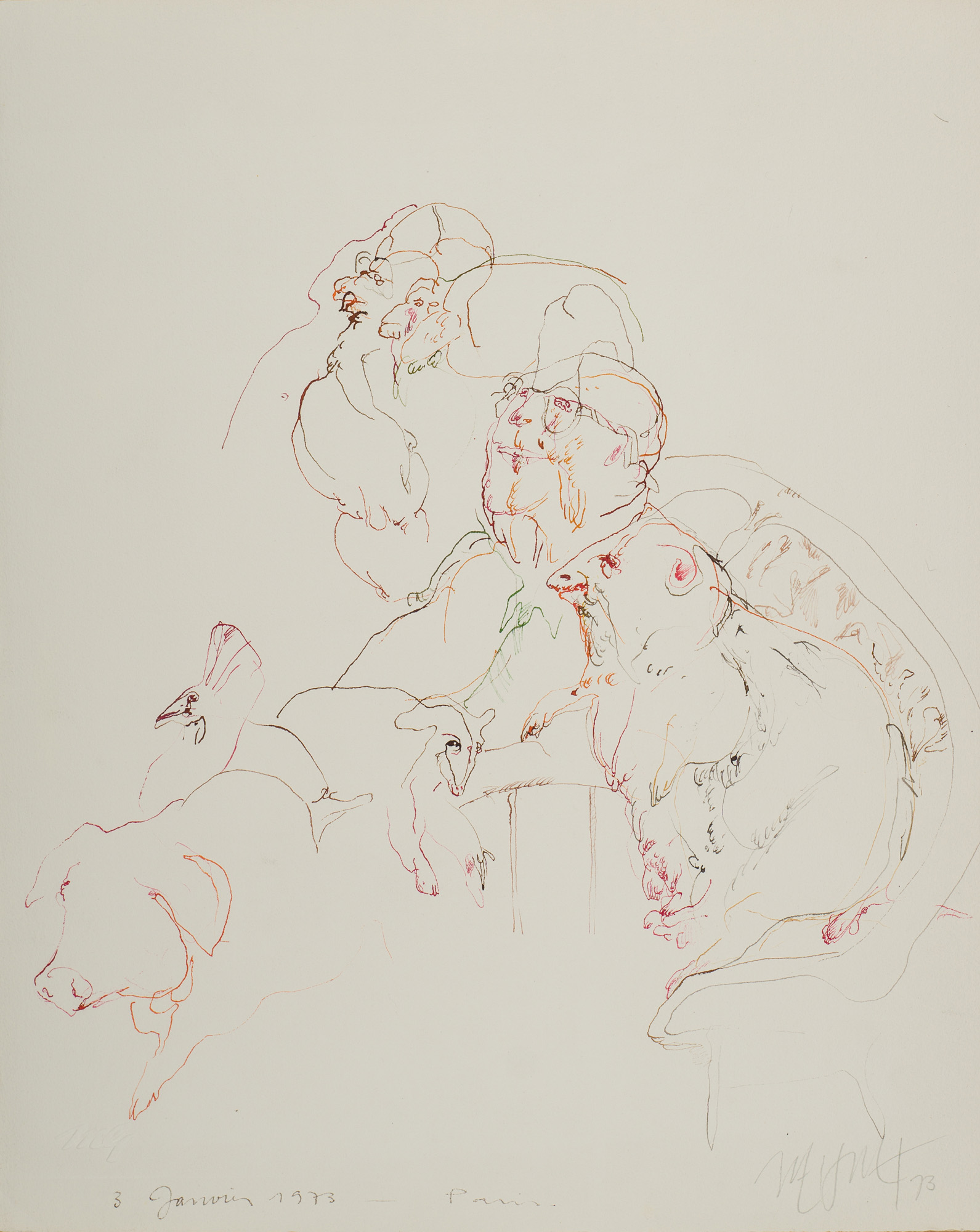
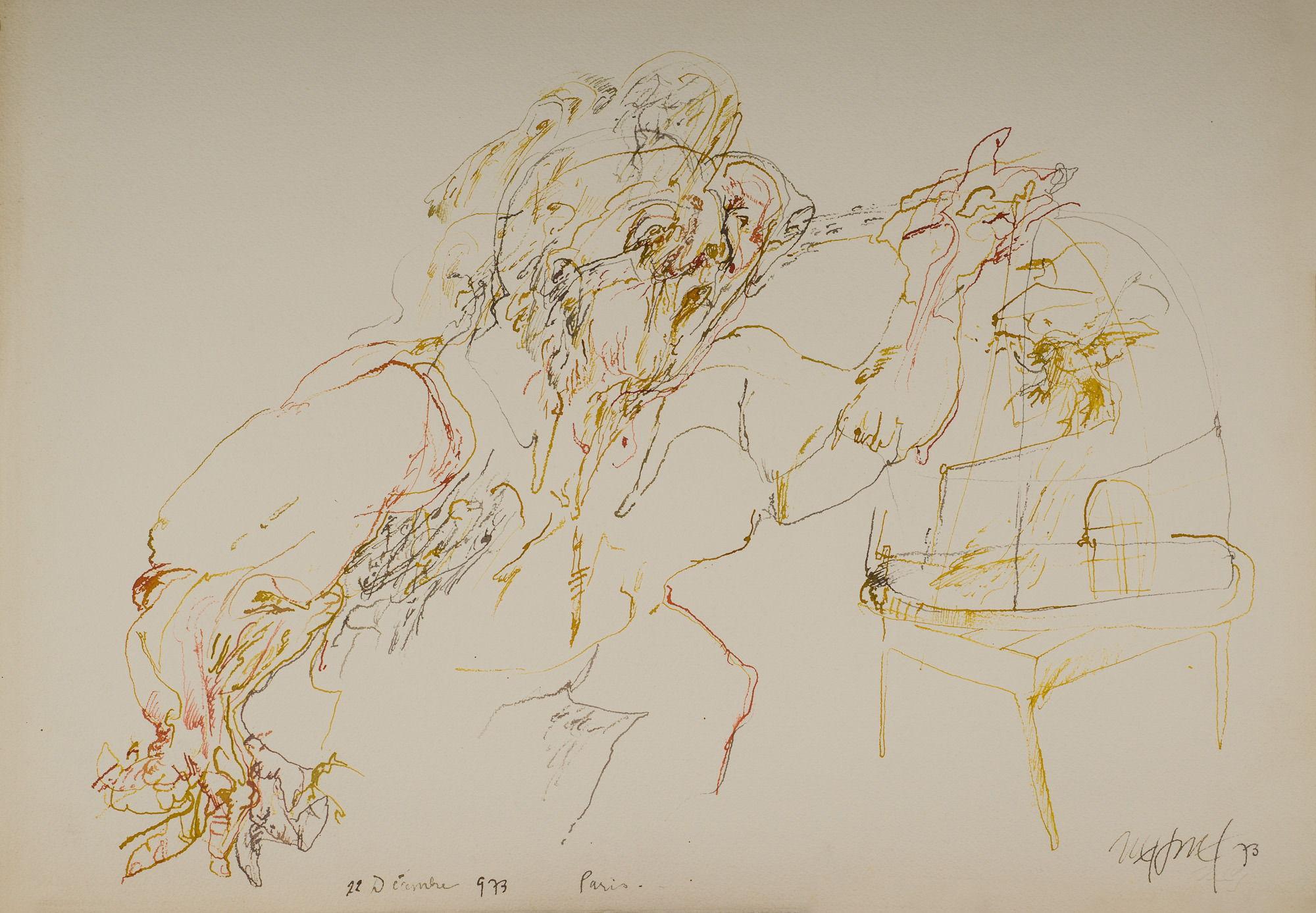
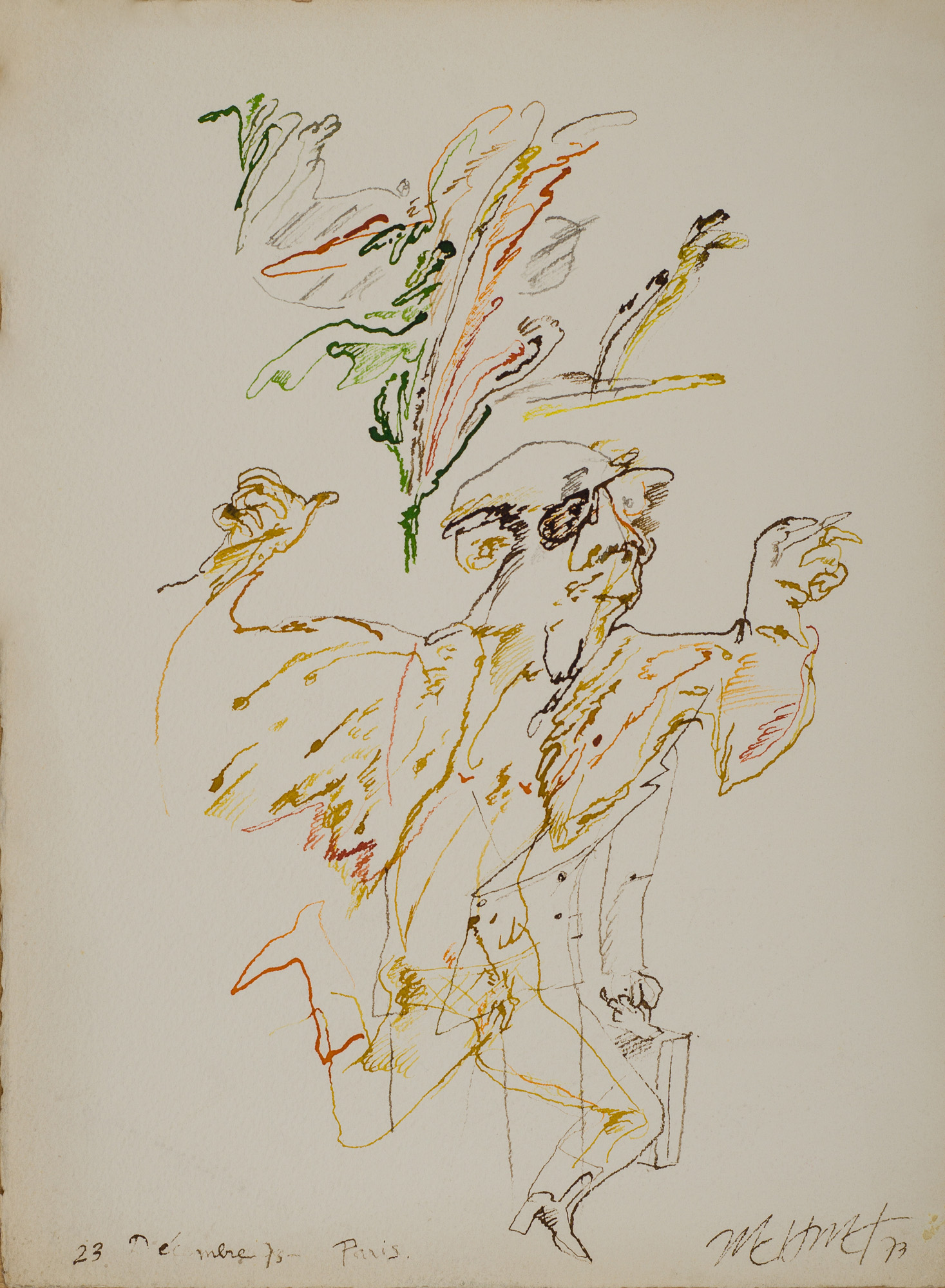
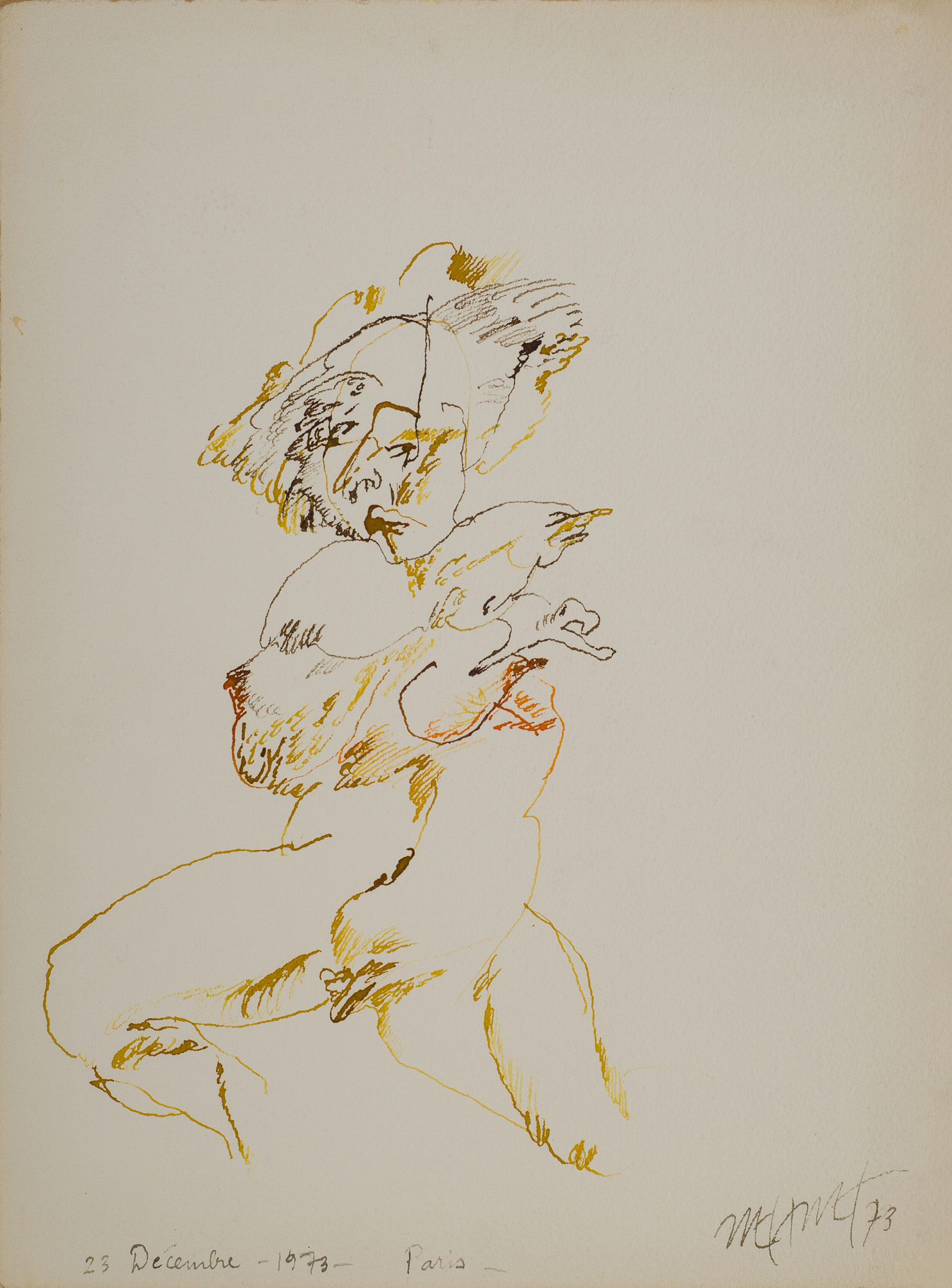
As a complement to the paintings, one must also note a fine group of cursive drawings—cruel, insolent, sometimes tender—in which monkeys, men, and other animal figures take center stage.
Not to be missed.
Jean Thiery